Retaining Walls Built Into Fences: A Smart Solution for Sloped Yards
Retaining Walls Built Into Fences: A Smart Solution for Sloped Yards
Retaining Walls Built Into Fences: A Smart Solution for Sloped Yards
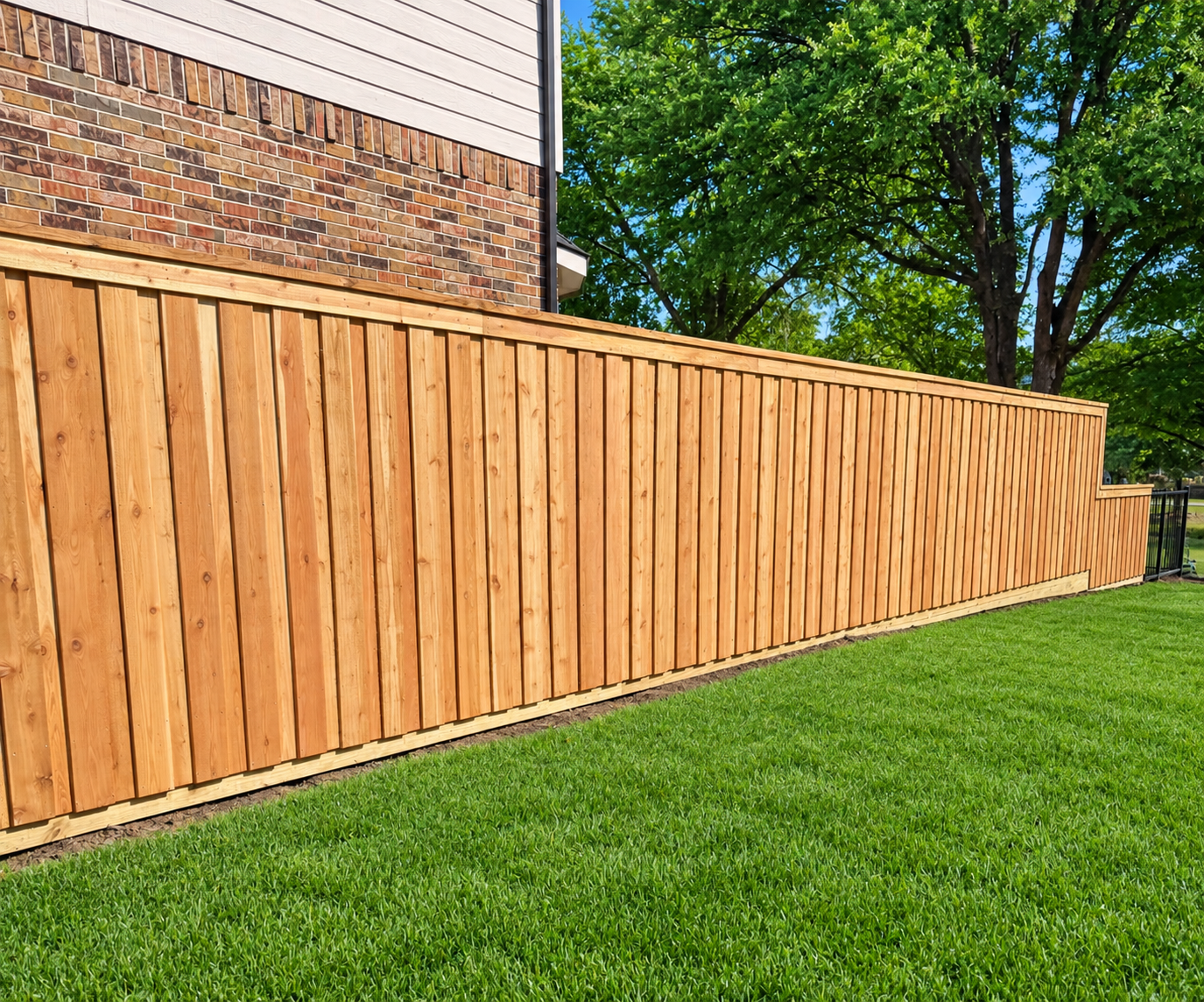
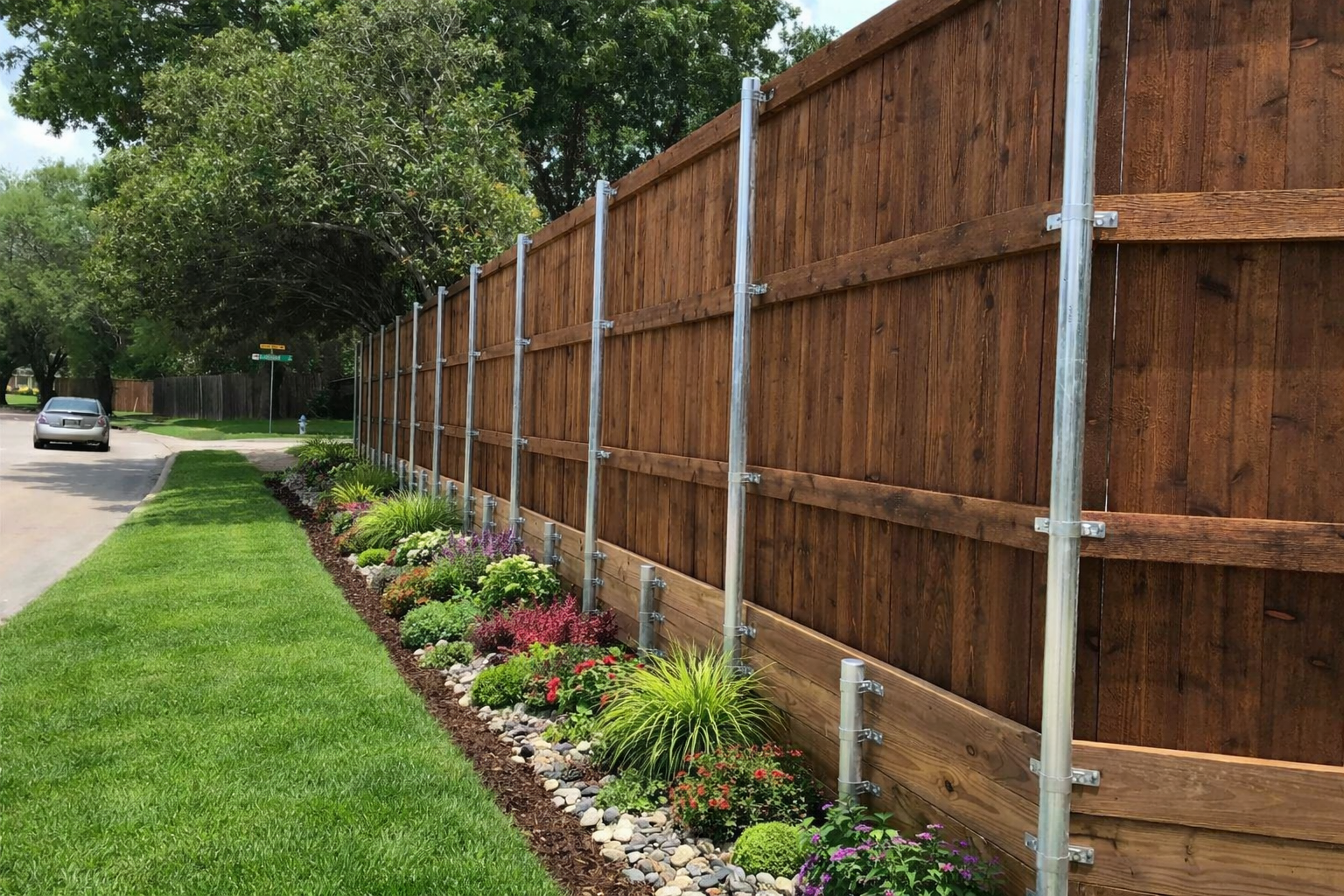
In many North Texas neighborhoods, especially homes backing up to alleys or greenbelts, sloped yards are a common challenge. These grade changes can create issues with fence height compliance, yard usability, drainage, and long-term fence durability. One of the most effective solutions we use is integrating a retaining wall directly into the fence design using 2x6 kickboards, like the example shown here.
This approach is both practical and code-conscious—and it’s something we install often.
Why Fence Height Matters (and How Cities Measure It)
Most cities measure fence height from the inside grade of the yard, not from the outside or alley side. While many municipalities allow up to an 8-foot-tall fence, elevation changes can make a fence appear much taller from the back side if the yard slopes downward.
That’s where a built-in retaining wall becomes essential.
By retaining the soil on the inside of the yard, the fence remains compliant with height regulations while still providing full privacy and coverage on the outside. From the alley or rear view, the fence may look taller—but from the inside grade, it stays within city limits.
How Retaining Walls Built Into Fences Work
Instead of allowing the yard to slope down naturally, pressure-treated 2x6 kickboards (also called rot boards) are stacked at the base of the fence line. These boards act as a retaining wall, holding back soil and allowing the homeowner to gradually build up and level their yard.
This solution is especially helpful for:
- Rear-entry homes
- Homes backing up to alleys
- Properties with steep backyard slopes
- Yards with drainage concerns
- Pool areas where a level grade is required
A Big Win for Pool Yards
For homeowners with pools, a level yard isn’t just about looks—it’s about safety and functionality. Retaining walls built into fences allow the yard to be filled and leveled around pool decking, preventing soil erosion and keeping the grade consistent.
This creates a cleaner transition between the pool, decking, and yard, while also ensuring the fence meets pool code and city requirements.
Protecting the Fence: Pressure-Treated vs. Cedar
One of the biggest benefits of this system is material protection.
The retaining portion of the fence is built using pressure-treated lumber, which is specifically designed to withstand:
- Moisture
- Soil contact
- Ground retention
- Long-term exposure to the elements
Cedar pickets, while beautiful and durable above ground, do not hold up well when in constant contact with soil or water. By using pressure-treated boards at the bottom, we keep cedar pickets elevated and dry—dramatically extending the life of the fence.
This detail alone can add years to the overall lifespan of the fence.
A Cleaner Look and a More Usable Yard
Beyond structure and durability, integrated retaining walls allow homeowners to:
- Create a level, usable backyard
- Add clean landscaping along the fence line
- Improve drainage and erosion control
- Maintain a consistent fence height inside the yard
- Avoid future fence leaning or ground movement
It’s a solution that solves multiple problems at once—and it’s one of the reasons we recommend it so often for sloped properties.
Built With Purpose, Not Just Privacy
A fence should do more than mark a boundary. When built correctly, it should work with your property’s grade, protect your investment, and make your yard more functional.
Integrated retaining walls using pressure-treated kickboards are a smart, long-term solution—and when paired with quality cedar fencing, they offer both strength and curb appeal.
If your yard slopes toward an alley, greenbelt, or neighboring property, this type of fence design may be exactly what you need.