Black Steel Fencing: Why We Use Brackets Instead of Welding
Black Steel Fencing: Why We Use Brackets Instead of Welding
Black Steel Fencing: Why We Use Brackets Instead of Welding
When it comes to durability, security, and a clean modern look, black steel fencing is one of the best options available. It’s strong, long-lasting, and adds a high-end finish to any property.
But not all steel fences are built the same.
One of the biggest differences comes down to how the fence panels are attached to the posts—and at Frisco Fence, we strongly prefer using brackets instead of welding. Here’s why.
🔩 What Is Black Steel Fencing?
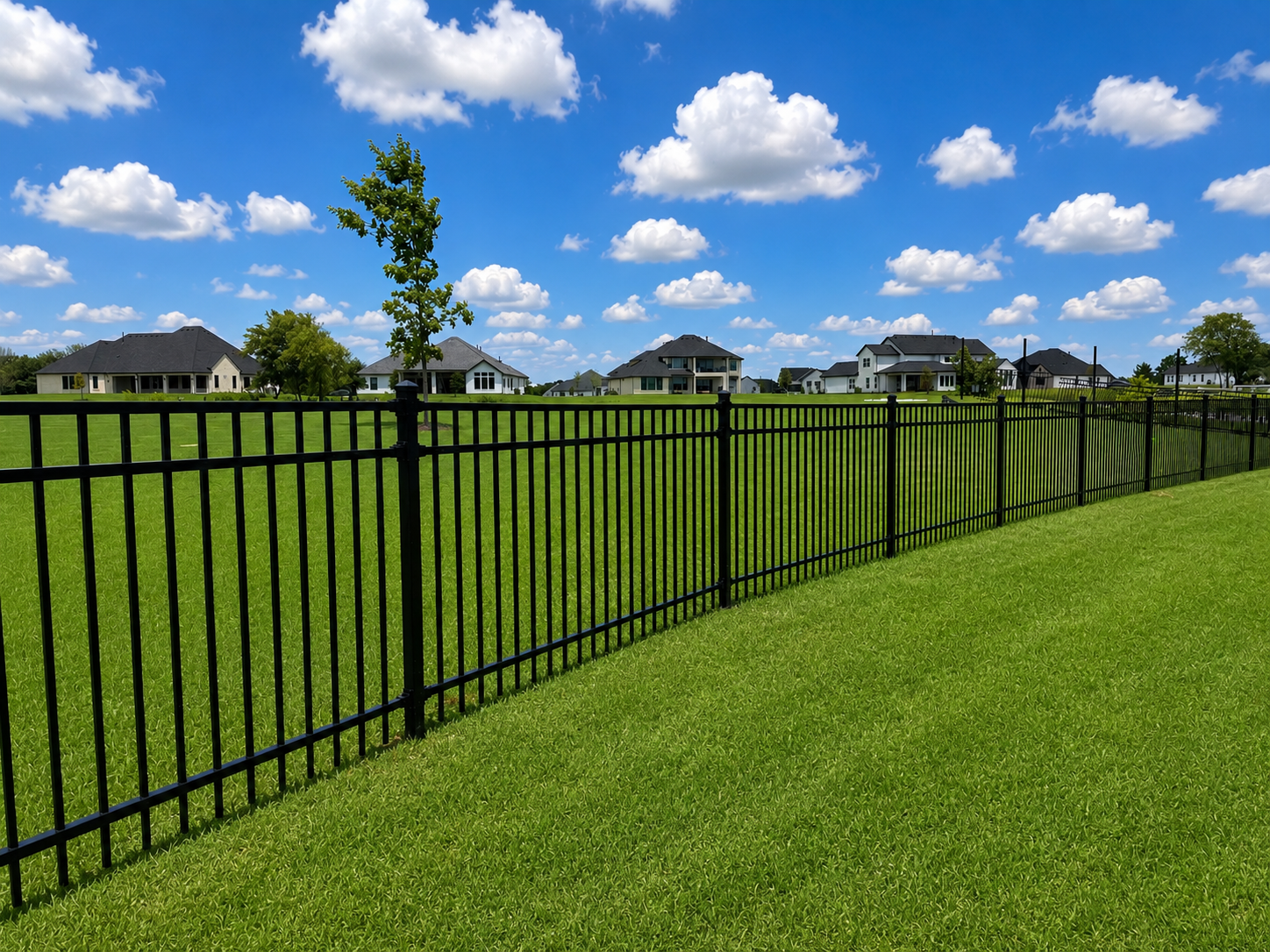
Black steel fencing (often powder-coated) is designed to withstand the elements while maintaining a sleek, uniform appearance. It’s commonly used for:
- Perimeter fencing
- Pool enclosures
- Decorative yard fencing
- Security applications
The powder coating helps protect the steel from rust and corrosion—but how the fence is installed plays a huge role in how long that protection actually lasts.
⚖️ Brackets vs. Welding: What’s the Difference?
There are two main ways to attach steel fence panels to posts:
Welded Installation
- Panels are permanently welded to posts on-site
- Requires specialized equipment and labor
- Creates a fixed, non-removable structure
Bracket Installation
- Panels are secured using heavy-duty steel brackets
- Mechanically fastened (no welding required)
- Allows panels to be removed if needed
While both methods can hold a fence in place, the long-term performance is very different.
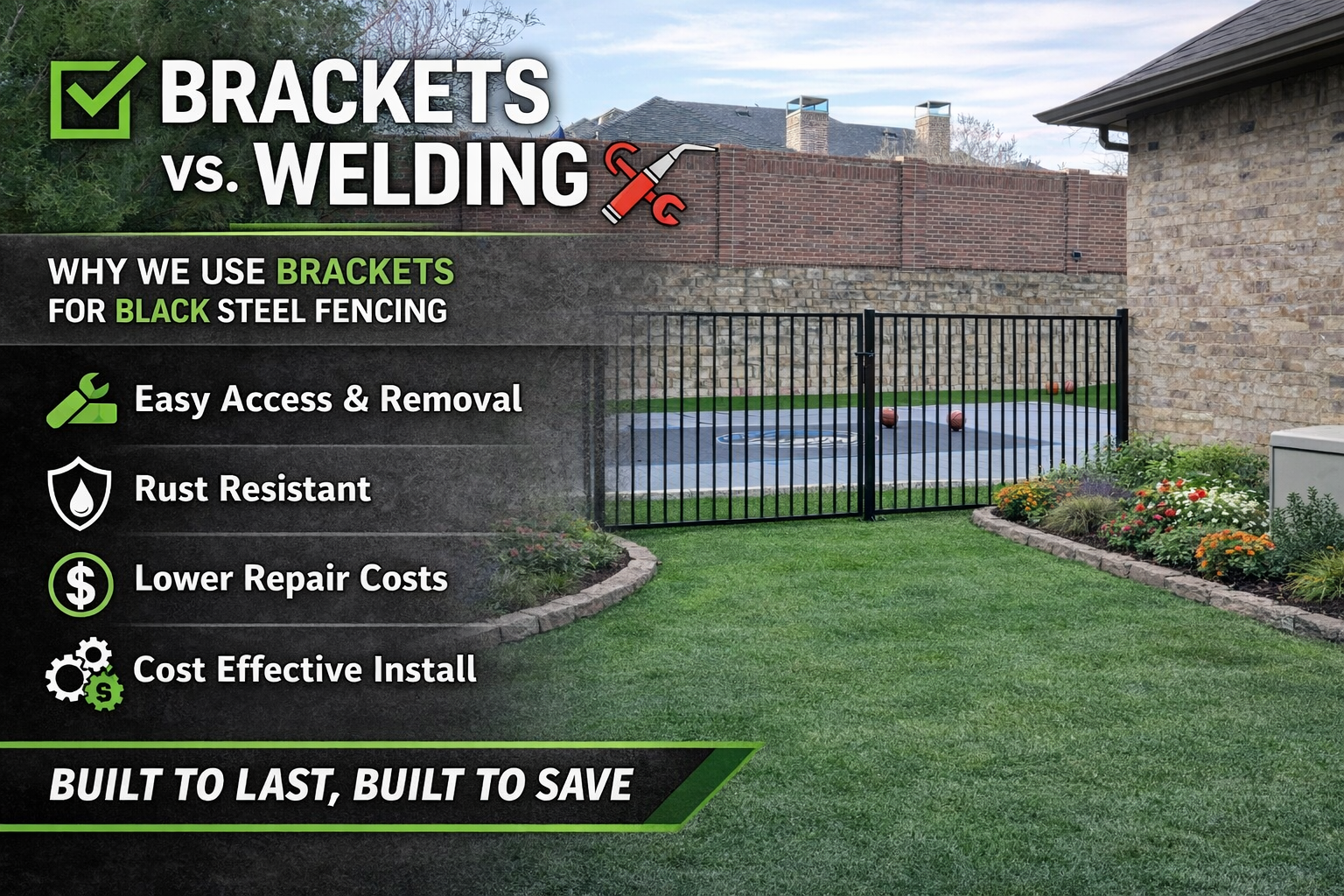
✅ Why We Prefer Brackets Over Welding
1. Easier Access When You Need It
One of the biggest advantages of brackets is accessibility.
If you ever need to:
- Bring equipment into the yard
- Access utilities
- Replace or modify part of the fence
A bracketed panel can be removed and reinstalled easily.
With a welded fence, you’re stuck. The only option is to cut the fence or bring in a welder, which adds time, cost, and hassle.
2. Reduced Risk of Rust
This is a big one.
Black steel fencing is protected by a powder-coated finish. When you weld on-site:
- The heat burns off the powder coating
- Bare steel is exposed
- That area becomes highly vulnerable to rust and corrosion
Even if it’s touched up afterward, it’s never as strong as the original factory coating.
Brackets eliminate this issue completely because:
- No heat is applied
- The protective coating stays intact
- The fence maintains its long-term resistance to rust
3. Lower Long-Term Repair Costs
Repairs are where the difference really shows.
With bracket systems:
- Panels can be removed and replaced quickly
- No specialized labor required
- Repairs are faster and more affordable
With welded systems:
- You need a professional welder just to access or repair the fence
- Costs are significantly higher
- Repairs can be more invasive and time-consuming
4. More Cost-Effective Installation
Welding isn’t just harder to repair—it’s also more expensive upfront.
- Requires skilled welding labor
- Requires additional equipment
- Takes more time on-site
Bracket systems streamline the installation process, helping keep costs more reasonable without sacrificing strength or quality.
💡 The Bottom Line
Both methods can secure a fence—but only one is built for the real world.
Bracket-mounted black steel fencing offers:
- Easier access when needed
- Better protection against rust
- Lower repair costs
- More efficient installation
That’s why at Frisco Fence, we choose brackets—because we’re not just building fences for today, we’re building them for the long run.
🛠️ Thinking About a Steel Fence?
If you’re considering black steel fencing for your home or property, we’d be happy to walk you through your options and help you choose the best installation method for your needs.