Nails vs. Screws: What’s Really Best for Building a Fence in North Texas?
This is a subtitle for your new post
Nails vs. Screws: What’s Really Best for Building a Fence in North Texas?
When it comes to building a quality fence, most homeowners focus on materials like cedar vs. pine. But one of the most overlooked decisions, and one that makes a huge difference over time, is how the fence is fastened.
At first glance, screws might seem like the better option. They feel stronger, tighter, more secure. But after tearing down and repairing hundreds of fences across North Texas, we’ve seen a very different reality.
🔍 What We See in the Field
A big part of our knowledge comes from repairs and replacements, not just new builds.
Here’s what we consistently find:
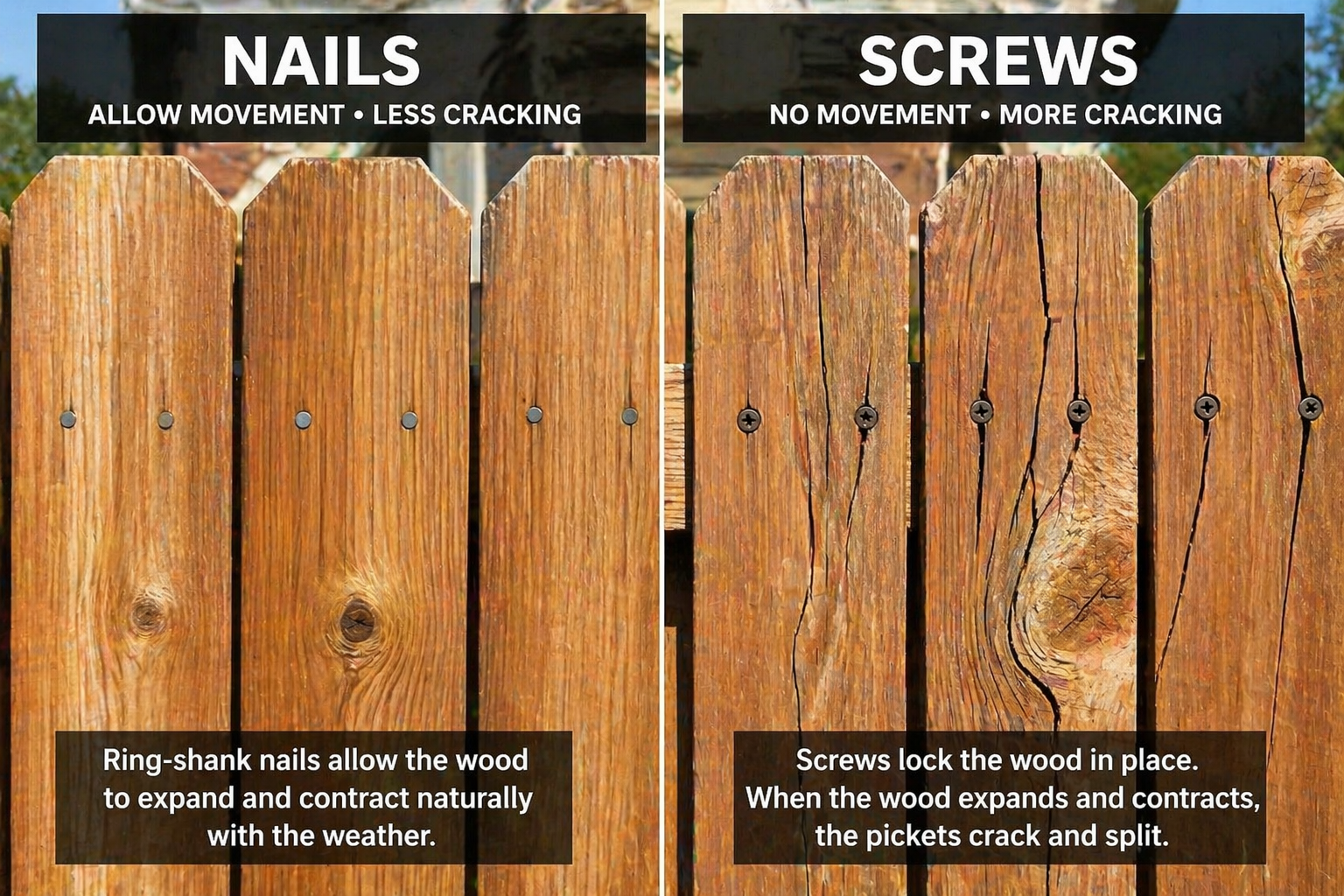
- Fences built with screws often have cracked and split pickets
- Fences built with galvanized ring-shank nails typically have far fewer cracked boards
That pattern isn’t random. It comes down to how wood behaves in our climate.
🌡️ North Texas Weather Is Tough on Wood
If you live in DFW, you already know how extreme our conditions are:
- Hot summers with intense sun
- Sudden temperature swings
- Heavy rains followed by dry heat
- Constant moisture changes in the wood
Wood is constantly expanding and contracting as it absorbs and releases moisture.
And that movement is where the difference between screws and nails really shows.
🪵 The Problem with Screws
Screws lock everything down tight.
That might sound like a good thing, but here’s the issue:
- When the picket expands, the screw doesn’t allow movement
- When it shrinks, tension builds around the fastener
- Over time, that stress causes the wood to split and crack
Once a picket cracks, it’s no longer just a small issue. It turns into a replacement.
🔨 Why We Use Galvanized Ring-Shank Nails
Nails, especially galvanized ring-shank nails, behave differently.
- They hold strong but allow slight flexibility
- They move with the wood instead of fighting it
- They reduce stress on the picket during expansion and contraction
That small amount of give makes a big difference over time.
Instead of cracking, the wood can naturally adjust to the environment.
🛠️ Maintenance: Simple vs. Complicated
Let’s talk real-life maintenance.
With Nails:
- Occasionally, a nail may back out slightly
- The fix? A few taps with a hammer
- Quick, easy, and something almost every homeowner can handle
With Screws:
- Cracked picket = full replacement
- Requires tools, time, and materials
- New picket rarely matches the old stain
- Turns into a bigger, more noticeable issue
🎨 The “Domino Effect” of Repairs
This is where screws really create long-term headaches.
When a picket cracks:
- You have to remove it
- Go buy a new picket
- Install it
- Stain it
And here’s the problem:
It almost never matches the rest of the fence.
Now instead of a clean, uniform fence, you’ve got mismatched boards that stand out.
Multiply that over time, and your fence loses its overall look and value.
💡 Long-Term Thinking Wins
At the end of the day, building a fence isn’t just about how it looks on day one. It’s about how it performs years down the road.
That’s why our approach is simple:
- Reduce cracking
- Minimize major repairs
- Keep maintenance easy for homeowners
- Protect the long-term appearance of the fence
And in North Texas conditions, nails consistently outperform screws in those areas.
Final Thoughts
Screws might feel stronger upfront, but they work against the natural movement of wood. Over time, that leads to more cracking, more repairs, and more frustration.
Galvanized ring-shank nails allow the fence to move naturally with the environment, which means:
- Fewer cracked pickets
- Easier maintenance
- Better long-term results
It’s a small detail that makes a big difference.
If you’re planning a new fence or dealing with repairs, we’re always happy to walk you through the best options for your specific setup.
Call or text 214-501-5450 for a free quote.