Not All Fences Are Built the Same
Not All Fences Are Built the Same
It’s Not About the Price — It’s About the Fence You’re Actually Getting
When homeowners start shopping for a new fence, price is often the first thing that grabs attention — and that’s completely understandable. A fence is a significant investment. But what many homeowners don’t realize is that price alone tells you very little about the quality, longevity, or safety of the fence being built.
This blog isn’t about saying a $12,000 fence is cheap or expensive. It’s about understanding what you’re actually getting for that price — and recognizing when a fence is overpriced for the quality being delivered.
Recently, we saw an 8-foot board-on-board fence advertised locally for $80 per linear foot, totaling $12,000 for 150 linear feet. On the surface, that may sound reasonable. But once the construction details were shared, it became clear that the issue wasn’t the number — it was the value.
What Was Being Offered
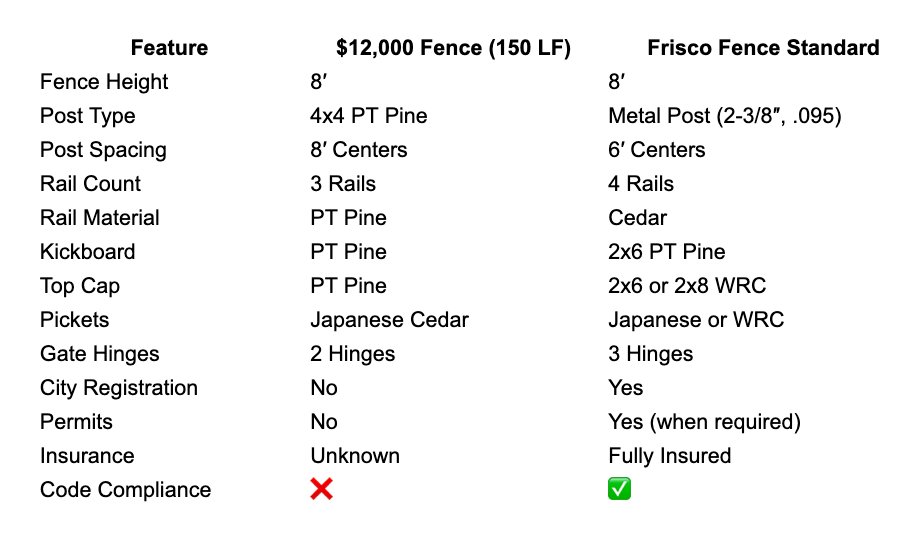
The fence being advertised was described as an 8-foot board-on-board fence built using:
- Japanese cedar pickets
- Pressure-treated pine rails
- Pressure-treated pine kickboard
- Pressure-treated pine top cap
- 4x4 pressure-treated pine posts
- Posts spaced on 8-foot centers
- Three horizontal rails
- Gates built with only two hinges
The contractor was not registered with the City of Frisco, and no permit was being pulled.
While this fence may look acceptable when first installed, these construction choices raise serious concerns regarding code compliance, structural integrity, longevity, and homeowner liability.
Why Construction Quality Matters
An 8-foot fence carries substantially more weight and wind load than a standard 6-foot fence. That means how it’s built matters — a lot.
Using wood posts spaced too far apart, fewer rails, and heavy pressure-treated materials increases the likelihood of leaning, sagging, warping, and premature failure. Gates built with only two hinges are far more prone to sagging over time, especially on taller fences.
Pressure-treated pine also performs poorly when used horizontally. It twists, cups, and warps as it dries, particularly when used for rails and top caps. It is significantly heavier than cedar, which adds downward stress over time and contributes to deflection and structural fatigue. When that material moves — which it almost always does — it transfers movement into the rest of the fence.
These are not cosmetic issues. They are structural problems that often result in costly repairs or full replacement years sooner than expected.
How Frisco Fence Builds Differently
At Frisco Fence, we believe homeowners should receive real value, not shortcuts.
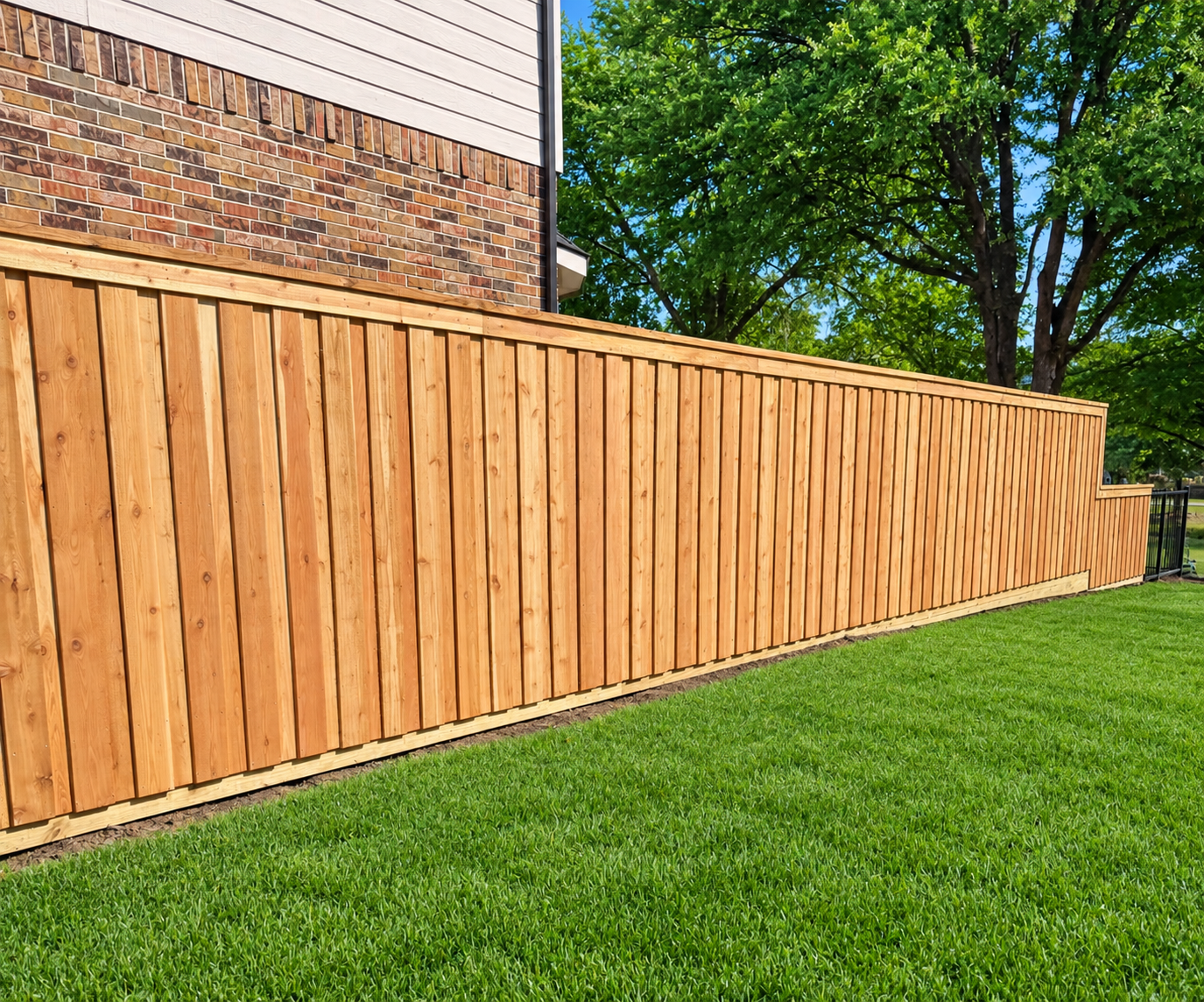
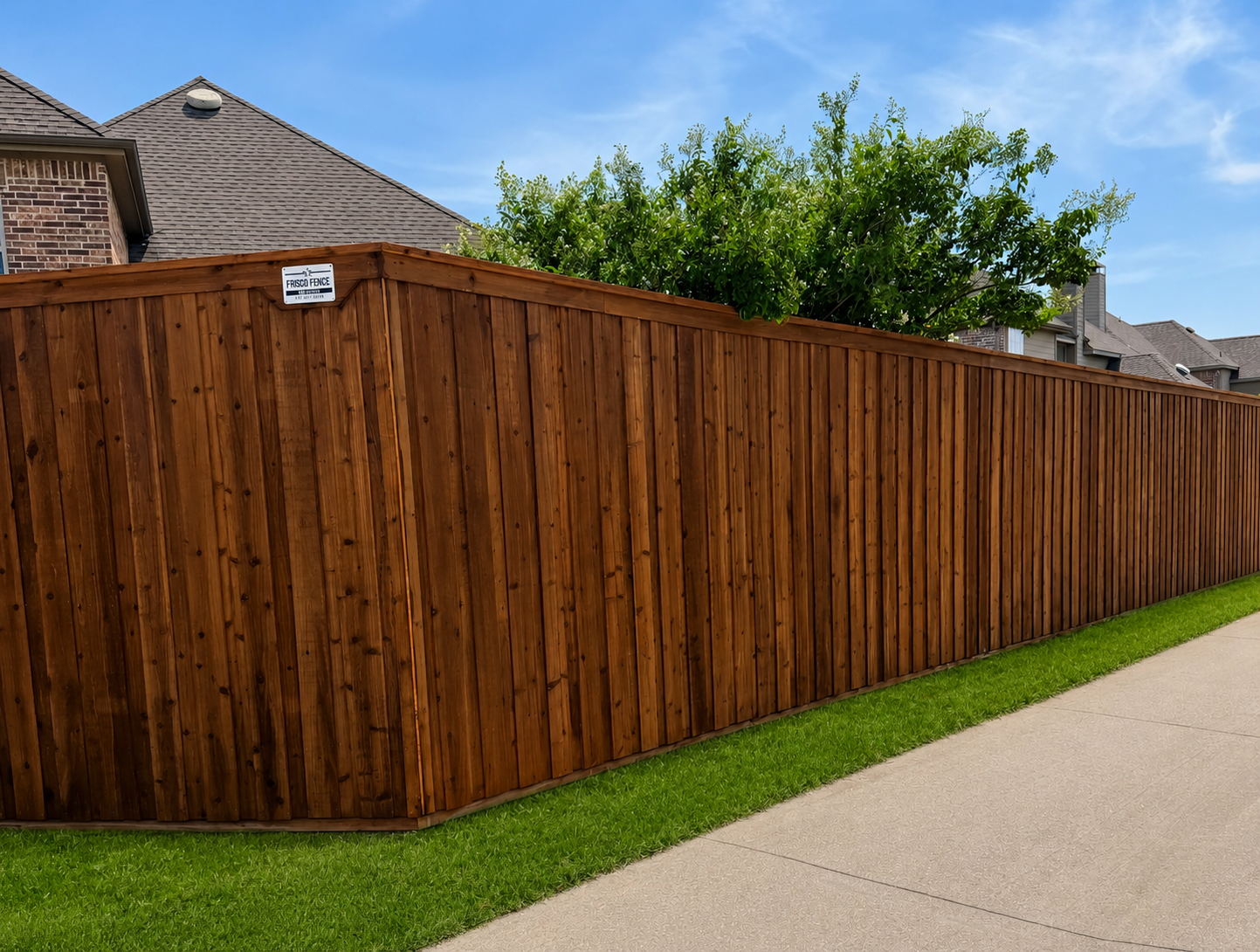
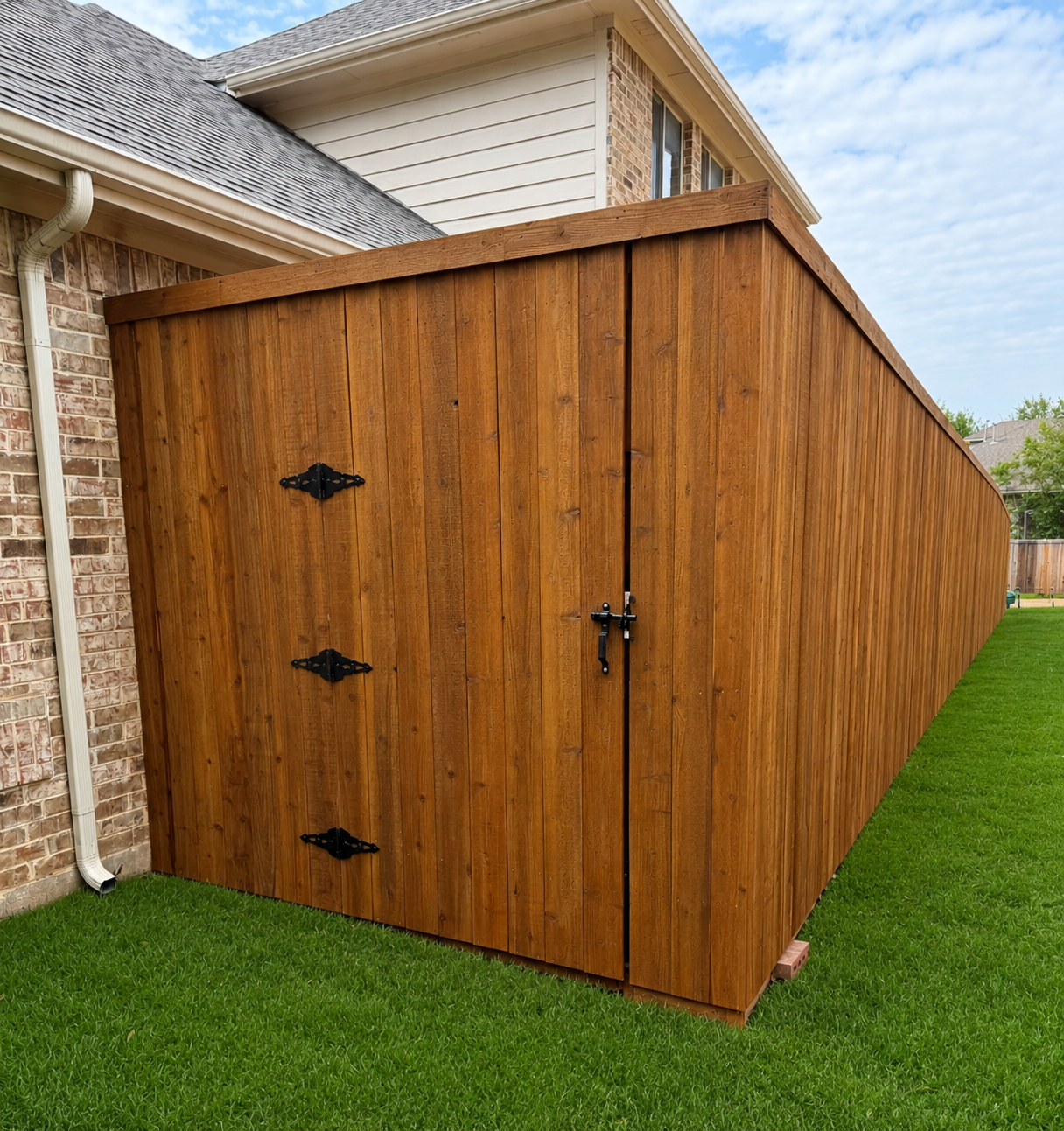
Our 8-foot board-on-board fences are built using:
- Metal posts (2-3/8″, .095 gauge)
- Posts set on 6-foot centers
- Posts cemented in the ground with Maximizer
- Four horizontal cedar rails
- 2x6 pressure-treated pine kickboards
- Japanese cedar or Western Red Cedar pickets
- 2x6 or 2x8 Western Red Cedar top caps
- Gates built with three heavy-duty hinges
We are registered with the City of Frisco, carry proper insurance, and pull permits when required. Our fences are built to meet or exceed code because doing it right protects both the homeowner and the investment.
The Real Comparison: Price vs. Value
Here’s where this comparison becomes important.
The fence advertised at $12,000 for 150 linear feet — built with fewer rails, wider post spacing, pressure-treated components used improperly, and no permit — would have cost a Frisco Fence customer approximately $8,250.
That’s a total savings of $3,750.
And unlike the fence being advertised, our fence would have been:
- Built to code
- Properly permitted through the City of Frisco
- Fully insured
- Structurally sound
- Built with appropriate materials
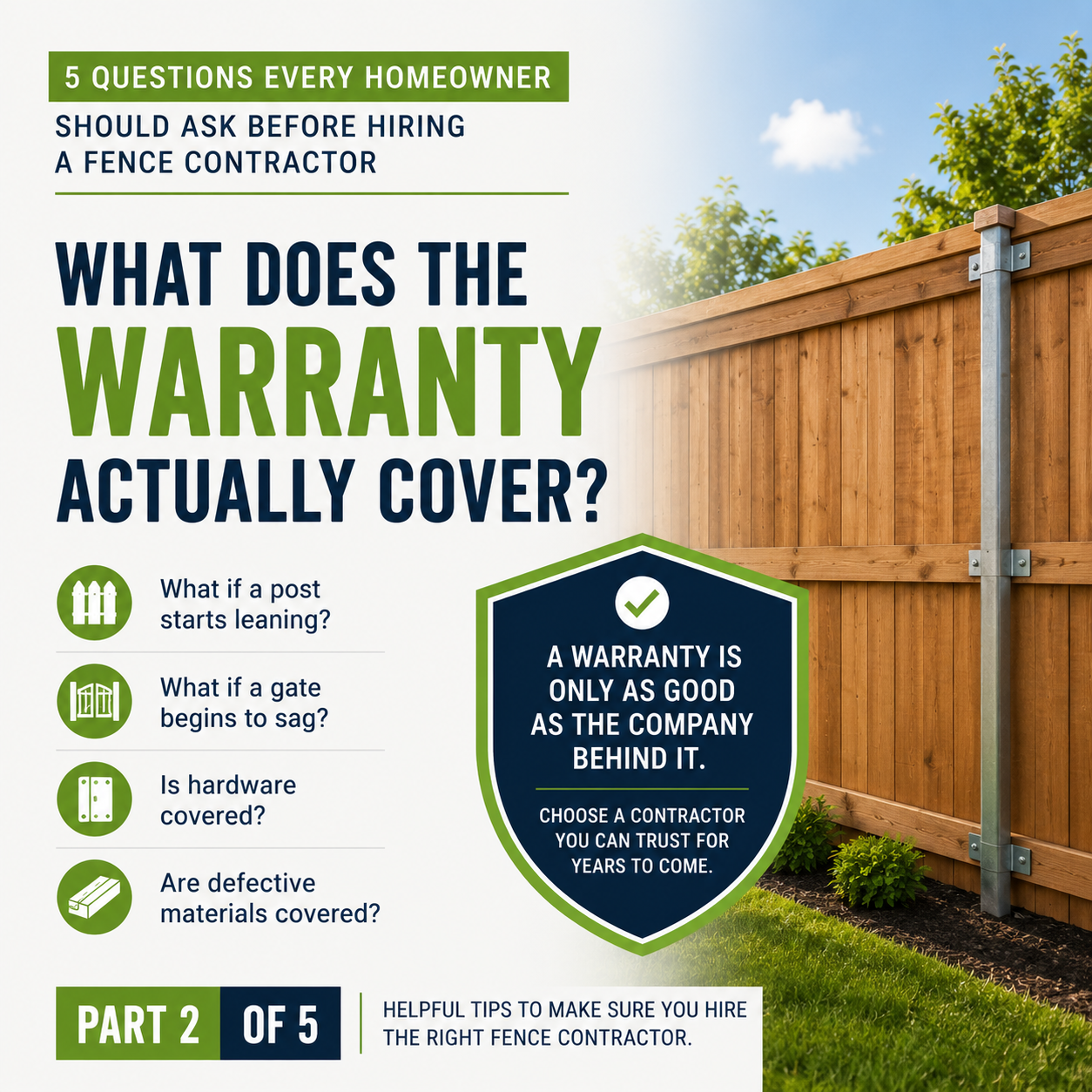
- Backed by a 10-year warranty
In other words, the homeowner would have paid less money for a better-built fence, done correctly, with protection and peace of mind long after the job was complete.
The Bottom Line
A good fence isn’t about finding the cheapest price — and it’s not about paying more for less.
It’s about working with a contractor who:
- Does the right thing
- Follows city codes
- Uses the right materials
- Builds fences that last
- Stands behind their work
At Frisco Fence, we don’t compete by cutting corners. We compete by delivering quality, integrity, and value — and backing it with a warranty that protects our customers.
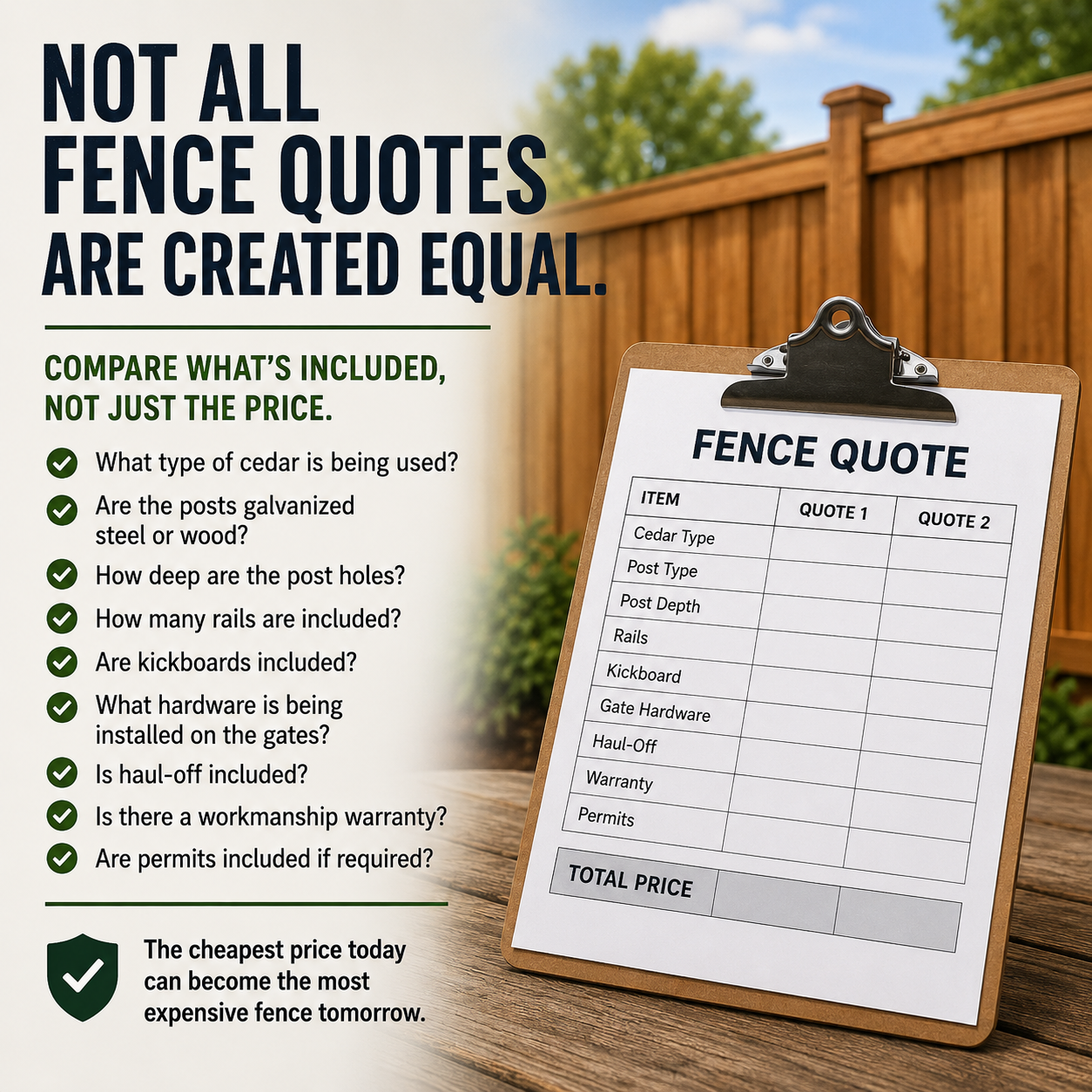
If you’re comparing fence quotes, don’t just ask how much it costs. Ask how it’s built, what materials are being used, whether it’s permitted, and what happens if there’s an issue years down the road.
When you do, the difference becomes clear.