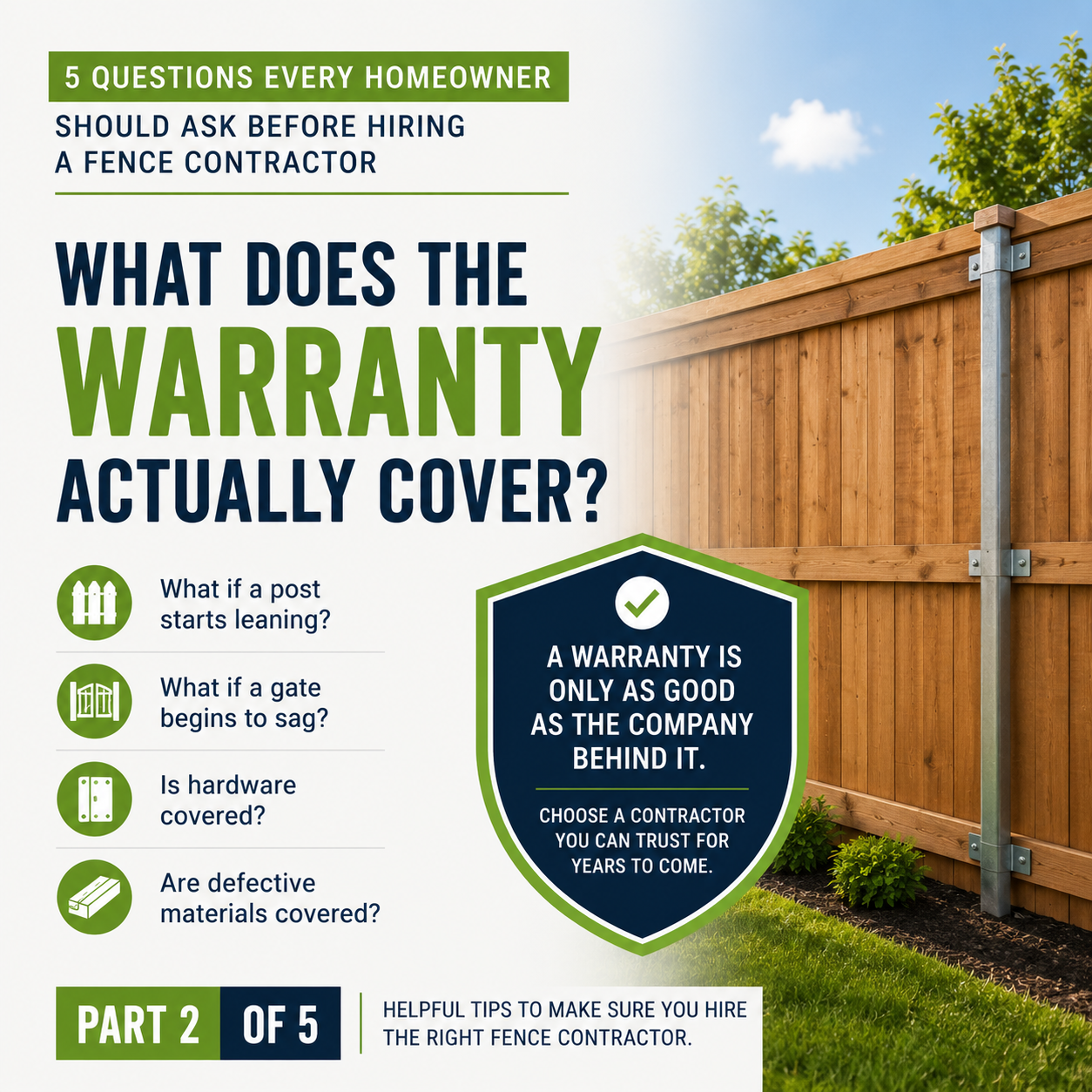
Part 4 of 5: Did Your Contractor Pull the Required Permit?
Part 4 of 5: Did Your Contractor Pull the Required Permit?

Part 4 of 5: Did Your Contractor Pull the Required Permit?
One of the biggest mistakes homeowners make when replacing a fence is assuming that if a contractor says they'll "take care of everything," they actually will.
Unfortunately, that's not always the case.
Many cities throughout North Texas require permits for certain fence projects. Depending on the city, your property's location, and the type of fence being installed, a permit may be required before work can begin.
If your contractor isn't pulling permits when they're required, you—not the contractor—could be the one dealing with the consequences.
Why Would a Contractor Skip the Permit?
The answer is simple.
Pulling permits takes time, paperwork, inspections, and money.
Some contractors skip the process altogether to keep their prices lower and finish jobs faster.
Unfortunately, that shortcut can become your problem later.
What Happens If a Permit Was Required?
If the city discovers work was completed without the proper permit, you could face:
- Stop work orders
- Fines
- Required inspections after the fact
- Delays when selling your home
- Being required to modify or even remove the fence to bring it into compliance
These situations are expensive, stressful, and completely avoidable.
Permits Help Protect You
A permit isn't just another fee.
It's one more layer of protection to help ensure your project complies with local building codes, property setbacks, easements, visibility requirements, and other regulations designed to protect homeowners and their neighbors.
An experienced fence contractor should know when a permit is required and should be willing to handle the process on your behalf.
Ask This One Simple Question
Before signing a contract, ask:
"Does my project require a permit, and if so, who is responsible for pulling it?"
If the answer is vague, or you're told, "Nobody ever pulls permits," that's a red flag worth investigating before work begins.
Don't Compare Price Alone
A lower price isn't always a better value.
Sometimes the difference between two estimates comes down to whether one contractor is following the rules while another is cutting corners.
Saving a few hundred dollars today isn't worth the risk of city violations, costly corrections, or problems when it's time to sell your home.
The best contractors don't look for shortcuts. They do the job correctly the first time.
Coming Next: Part 5
In the final article of this series, we'll discuss what separates an average fence from a great one. We'll cover craftsmanship, installation methods, and the small details that determine whether your fence lasts for decades or starts showing problems within just a few years.