Side-by-Side vs. Board-on-Board Fencing: What You Need to Know
Side-by-Side vs. Board-on-Board Fencing: What You Need to Know
Side-by-Side vs. Board-on-Board Fencing: What You Need to Know
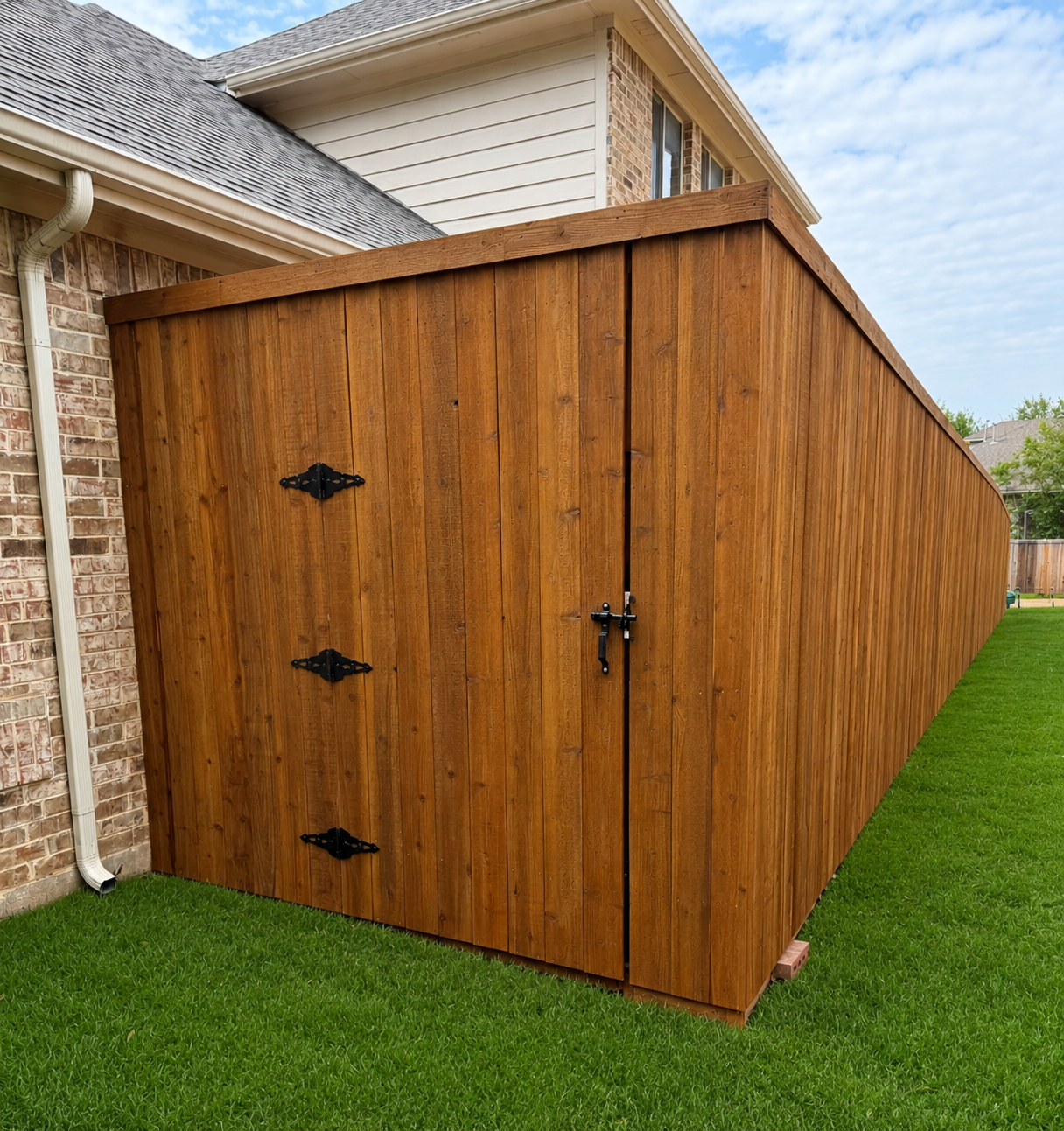
When it comes to choosing a wooden privacy fence, two popular styles stand out: side-by-side and board-on-board. Each has its own aesthetic and functional benefits, and understanding them can help you pick what works best for your home.
The Basics: What’s the Difference?
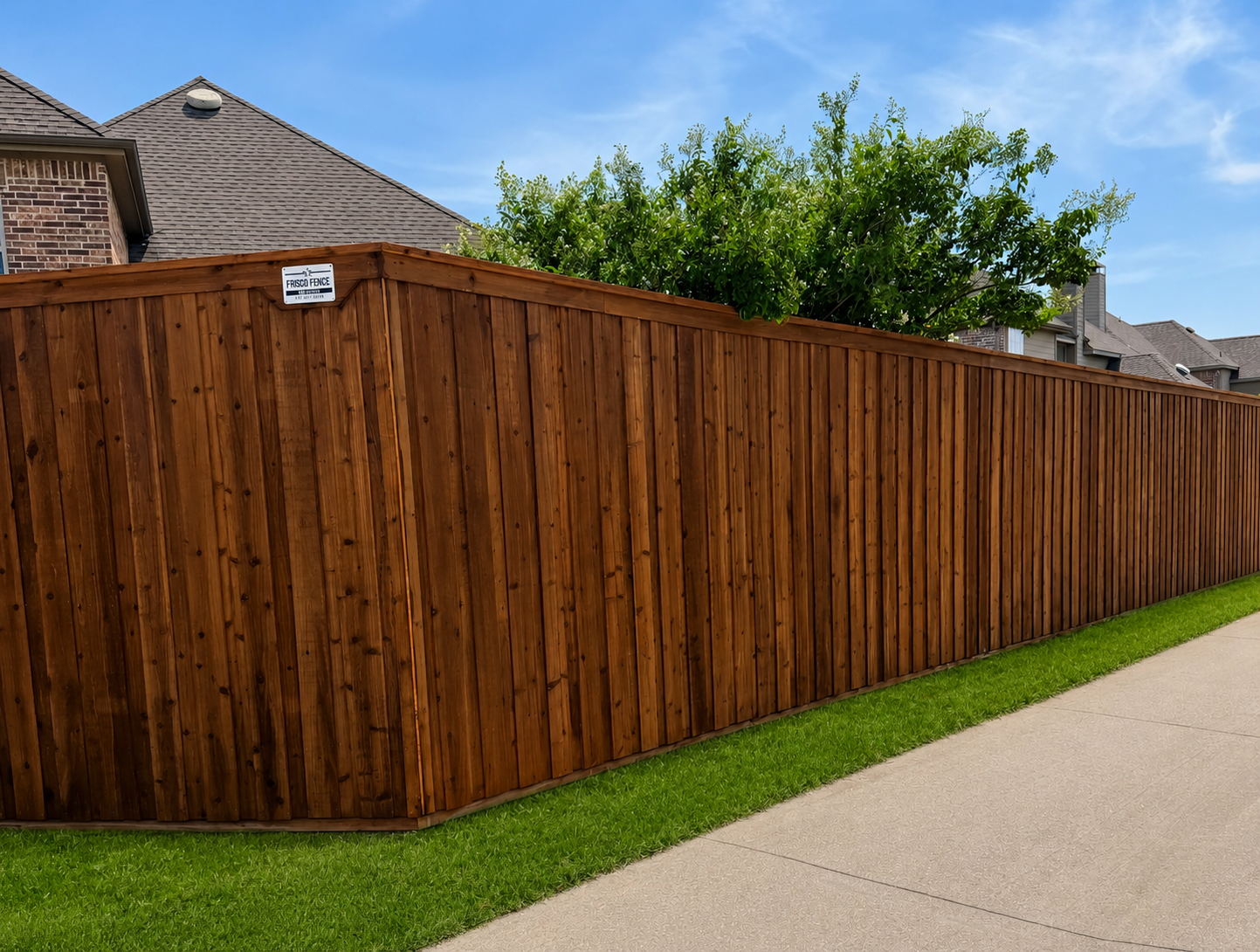
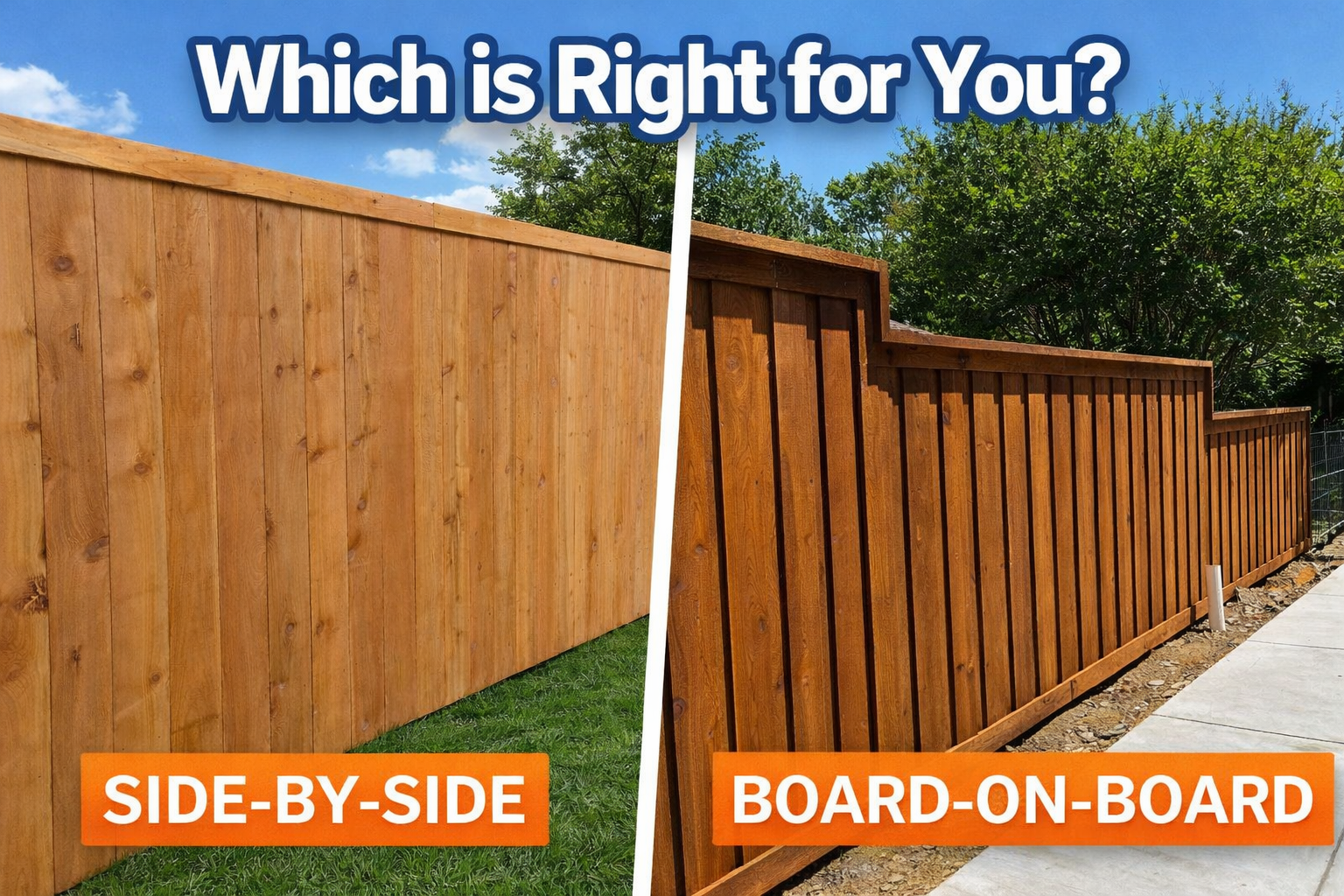
- Side-by-Side: Boards are placed edge-to-edge, touching each other. Over time, wood shrinkage might cause small gaps between boards.
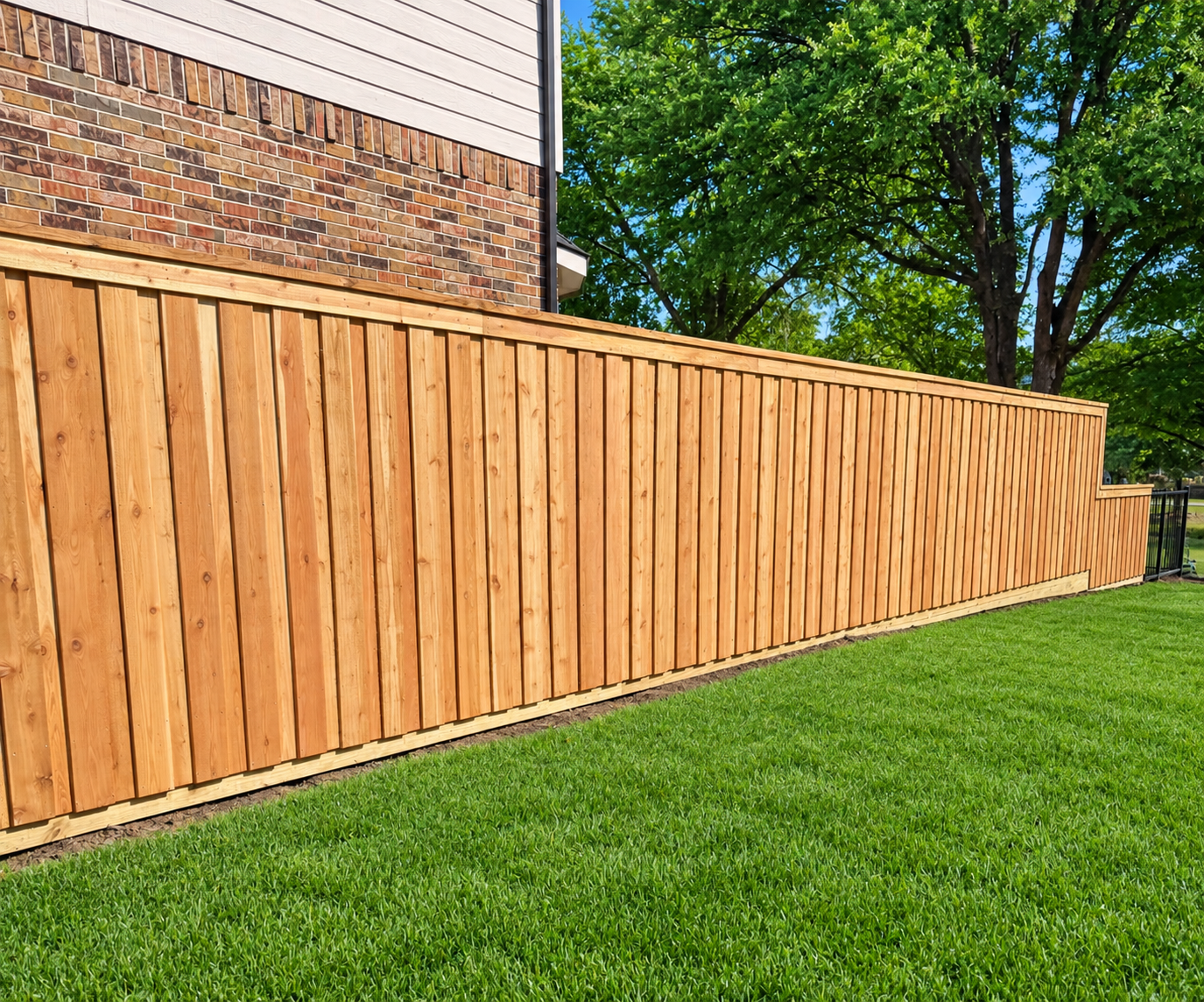
- Board-on-Board: Boards are overlapped, creating a layered effect. Even if the wood shrinks, there’s no visibility gap.
Advantages of Side-by-Side
- Cost-Effective: It typically uses fewer boards, so it’s often less expensive upfront.
- Quicker Installation: With fewer boards and no overlapping pattern, it installs more quickly.
- Classic Look: It offers that traditional, clean fence line that many homeowners are familiar with.
Disadvantages of Side-by-Side
- Potential Gaps: As wood naturally shrinks, gaps can appear between boards, reducing privacy.
- Less Privacy Over Time: While solid at first, those gaps may affect privacy in the long run.
Advantages of Board-on-Board
- Consistent Privacy: The overlapping design prevents gaps from forming, so it maintains privacy even as the wood settles.
- Enhanced Aesthetic: The layered look has depth and can be a more premium aesthetic in many neighborhoods.
- Wind Resistance: It’s often better at handling wind since the overlapping boards reinforce each other.
Disadvantages of Board-on-Board
- Higher Cost: Due to the overlap, more boards are required, which increases material and labor costs.
- Longer Install Time: The overlapping pattern takes more time to install properly.
Important Note: HOA & City Requirements
Some cities and HOAs require board-on-board fencing for privacy and consistency throughout the neighborhood. It’s always a good idea to check requirements before starting your project—feel free to reach out to us and we can help make sure everything is up to code.
Which Should You Choose?
If your priority is budget and you’re comfortable with some natural aging, side-by-side is a practical option. If long-term privacy, aesthetics, and wind resistance are key, board-on-board might be worth the investment. Either way, both styles can be customized to fit your yard and your style.