Vertical Wood Fencing vs. Horizontal Wood Fencing: Which Holds Up Better Over Time?
Vertical Wood Fencing vs. Horizontal Wood Fencing: Which Holds Up Better Over Time?
Vertical Wood Fencing vs. Horizontal Wood Fencing: Which Holds Up Better Over Time?
Horizontal fences have become one of the most popular modern fence styles in North Texas. Their clean lines and contemporary appearance make them a beautiful addition to many homes. We install horizontal fences for homeowners who love that modern aesthetic, and when they're built correctly with quality materials, they can look absolutely stunning.
However, after building and servicing fences throughout North Texas for many years, we've noticed some important differences in how horizontal fences age compared to traditional vertical fencing.
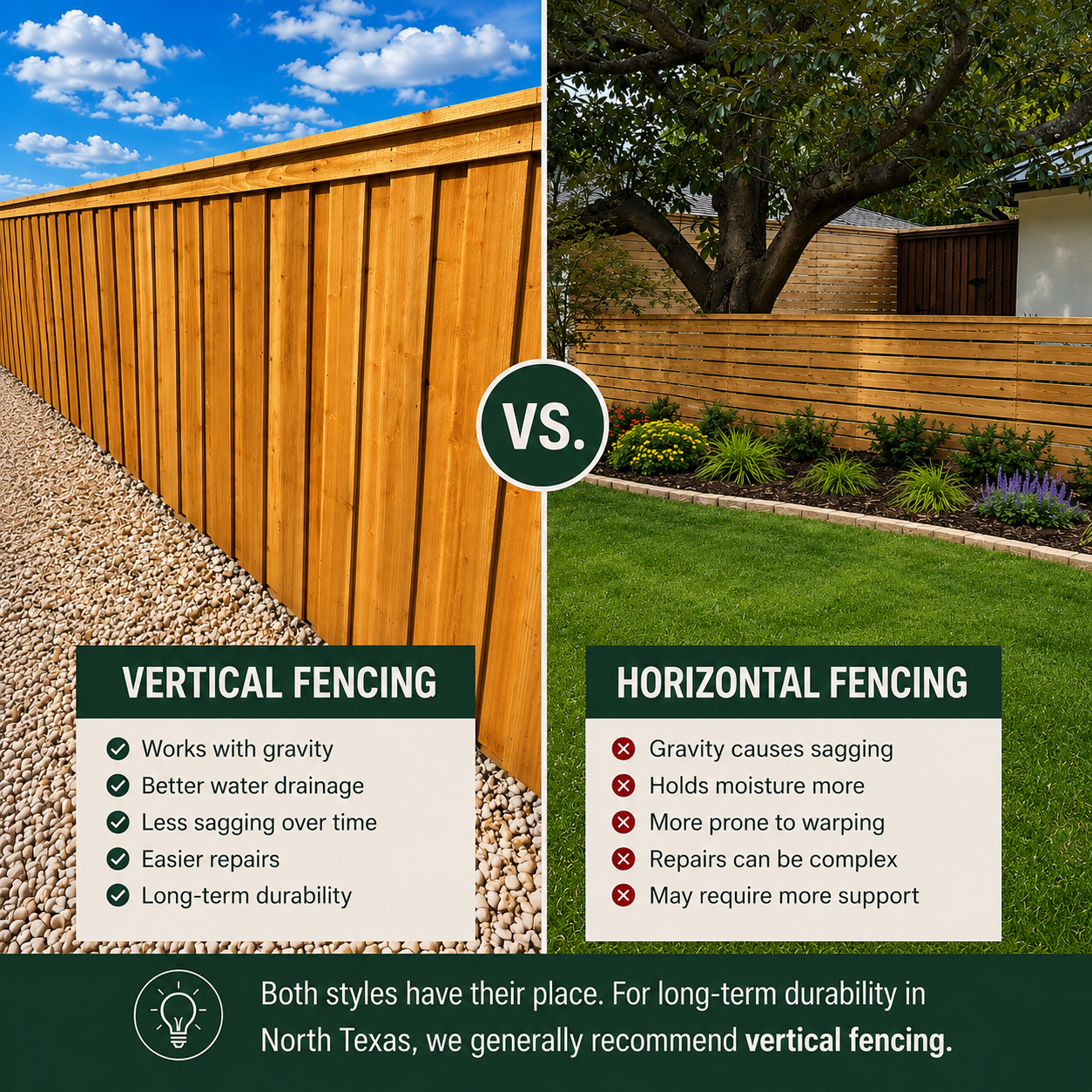
While both styles have their place, we generally believe that vertical fencing offers better long-term performance in our climate.
Here's why.
Gravity Never Stops Working
One of the biggest differences between the two fence styles is how gravity affects the pickets over time.
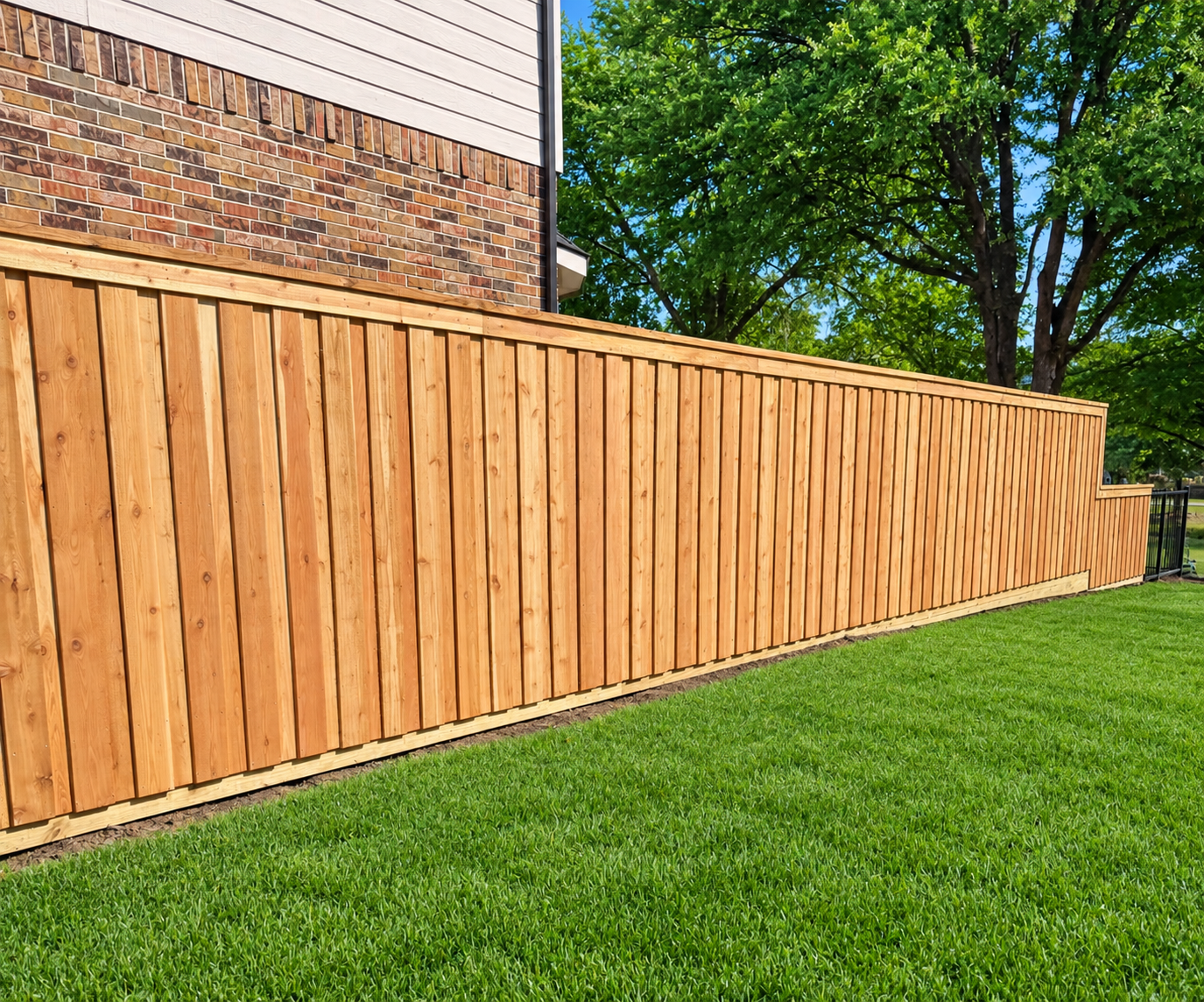
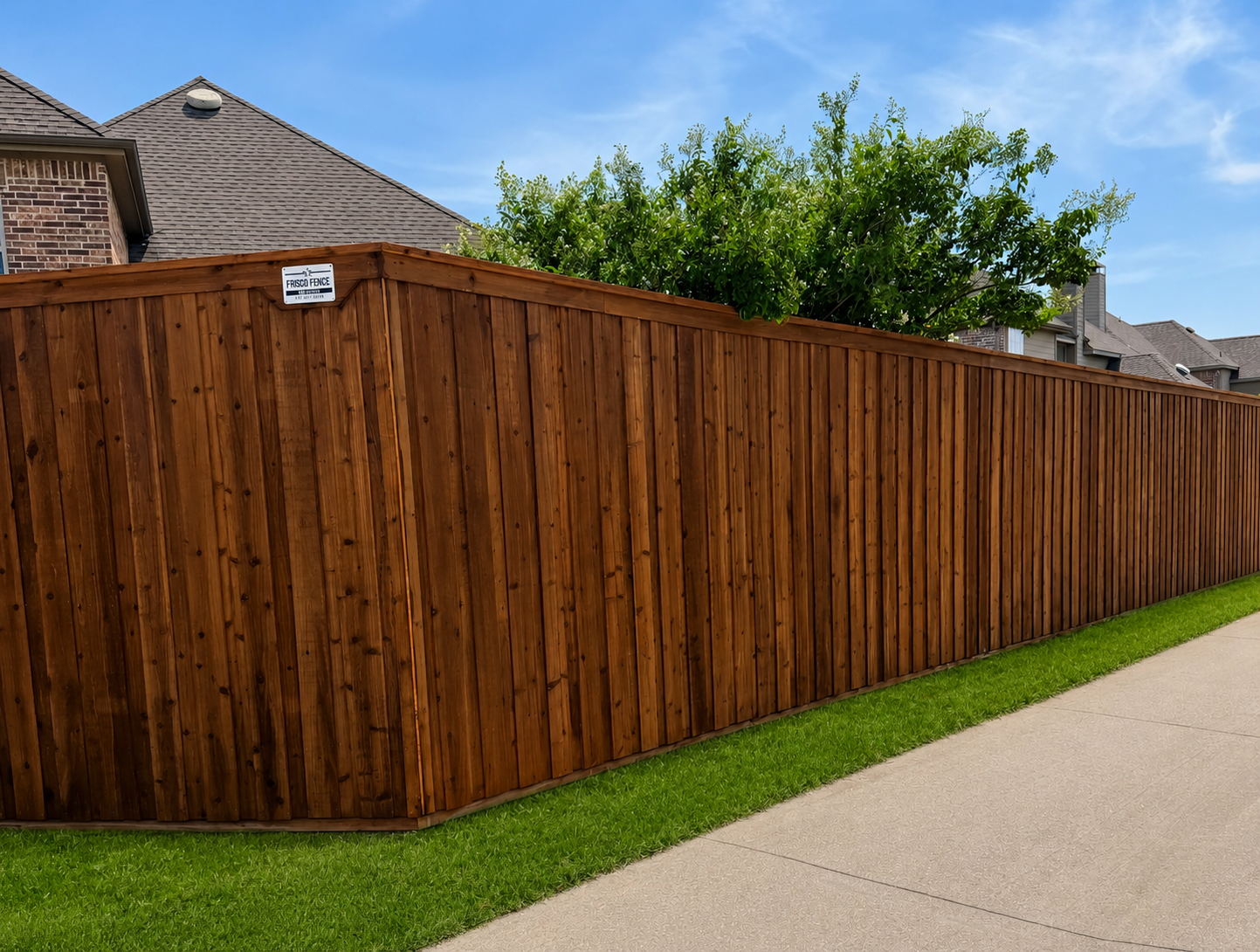
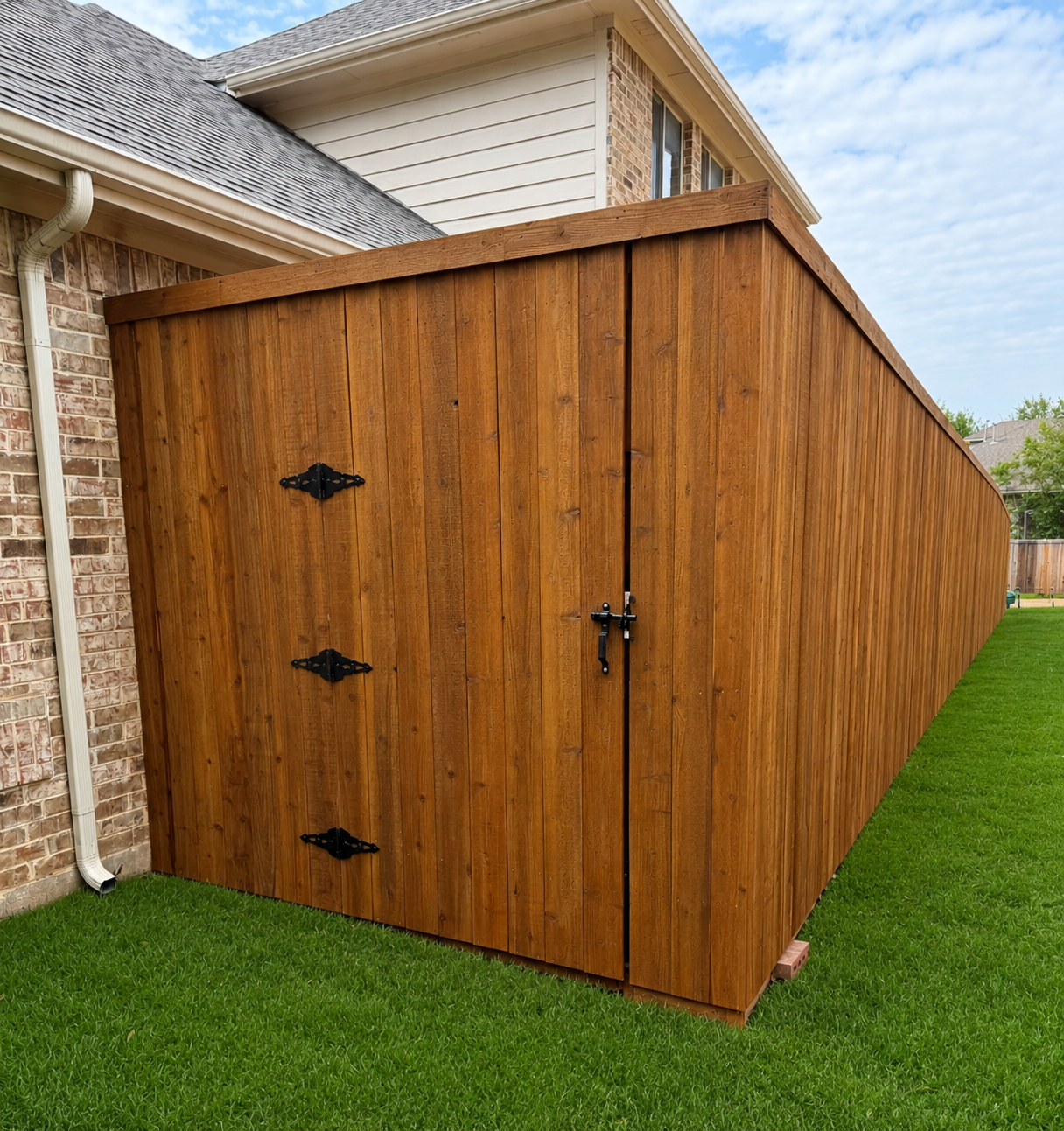
With a traditional vertical fence, each picket stands upright. Gravity actually works with the design, pulling the pickets straight downward while the rails provide support across the back.
With a horizontal fence, every board spans horizontally between posts. That means gravity is constantly pulling on the middle of each board.
Even premium cedar will naturally expand, contract, and move as temperatures and moisture change throughout the year. Over time, the constant downward pull can cause horizontal boards to:
- Develop slight sagging between supports
- Bow or cup more noticeably
- Create uneven gaps
- Require periodic adjustments or replacement
This doesn't happen overnight, but it is something we commonly see as horizontal fences age.
North Texas Weather Makes It Worse
Our climate is particularly demanding on wood fencing.
Throughout the year, your fence experiences:
- Triple-digit summer temperatures
- Intense UV exposure
- Heavy spring rains
- High humidity followed by extreme drought
- Strong winds
- Expansive clay soils that constantly move
Every one of these conditions causes wood to expand and contract.
When boards are installed horizontally, those movements combine with gravity, placing additional stress on each board over time.
Vertical pickets still move naturally, but because they're supported differently, they generally show less visible sagging as they age.
Water Sheds Better on Vertical Fences
Water is another important factor.
Rain naturally runs down vertically installed pickets and quickly drains away.
On horizontal fencing, there are often more opportunities for moisture to sit on exposed edges, joints, or decorative details depending on the design. Proper construction techniques help minimize this, but moisture management becomes more important with horizontal installations.
The faster water leaves the wood, the better.
Repairs Are Often Easier on Vertical Fences
As fences age, occasional repairs become part of normal maintenance.
With a traditional vertical fence, replacing a damaged picket is usually straightforward and inexpensive.
Horizontal fencing often requires more careful disassembly to remove and replace boards while maintaining consistent spacing and alignment. Depending on the design, repairs can take longer and may cost more.
Horizontal Fences Usually Require More Engineering
A properly built horizontal fence typically requires additional framing and support compared to a standard vertical fence.
Longer spans often need closer post spacing, stronger framing members, or additional blocking to help reduce future sagging.
When shortcuts are taken during installation, the effects of gravity become noticeable much sooner.
This is why choosing an experienced contractor is especially important for horizontal fence construction.
We Still Build Horizontal Fences
None of this means horizontal fences are a bad choice.
In fact, they're one of the most attractive fence styles available and can dramatically improve the appearance of a modern home.
For homeowners who love the look, we're happy to build them using quality materials and proper construction techniques.
We simply believe it's important to understand the long-term tradeoffs before making a decision.
Our Recommendation
If your top priorities are longevity, durability, easier maintenance, and the best long-term value, we generally recommend a traditional vertical cedar fence.
Vertical fencing has stood the test of time for decades because it works with gravity instead of fighting against it. The design naturally sheds water, resists visible sagging, and typically requires fewer structural considerations over its lifetime.
If your priority is achieving a sleek, contemporary look and you're comfortable with the possibility of additional maintenance as the fence ages, a horizontal fence may be the perfect fit.
At Frisco Fence & Stain, we'll always help you choose the fence that best fits your home's style, your budget, and your long-term expectations. Our goal isn't simply to build a fence. It's to build one you'll still be happy with for many years to come.