Why Board-on-Board Fences are So Popular in North DFW
wHY BOARD-ON-BOARD FENCES ARE SO POPULAR IN NORTH DFW
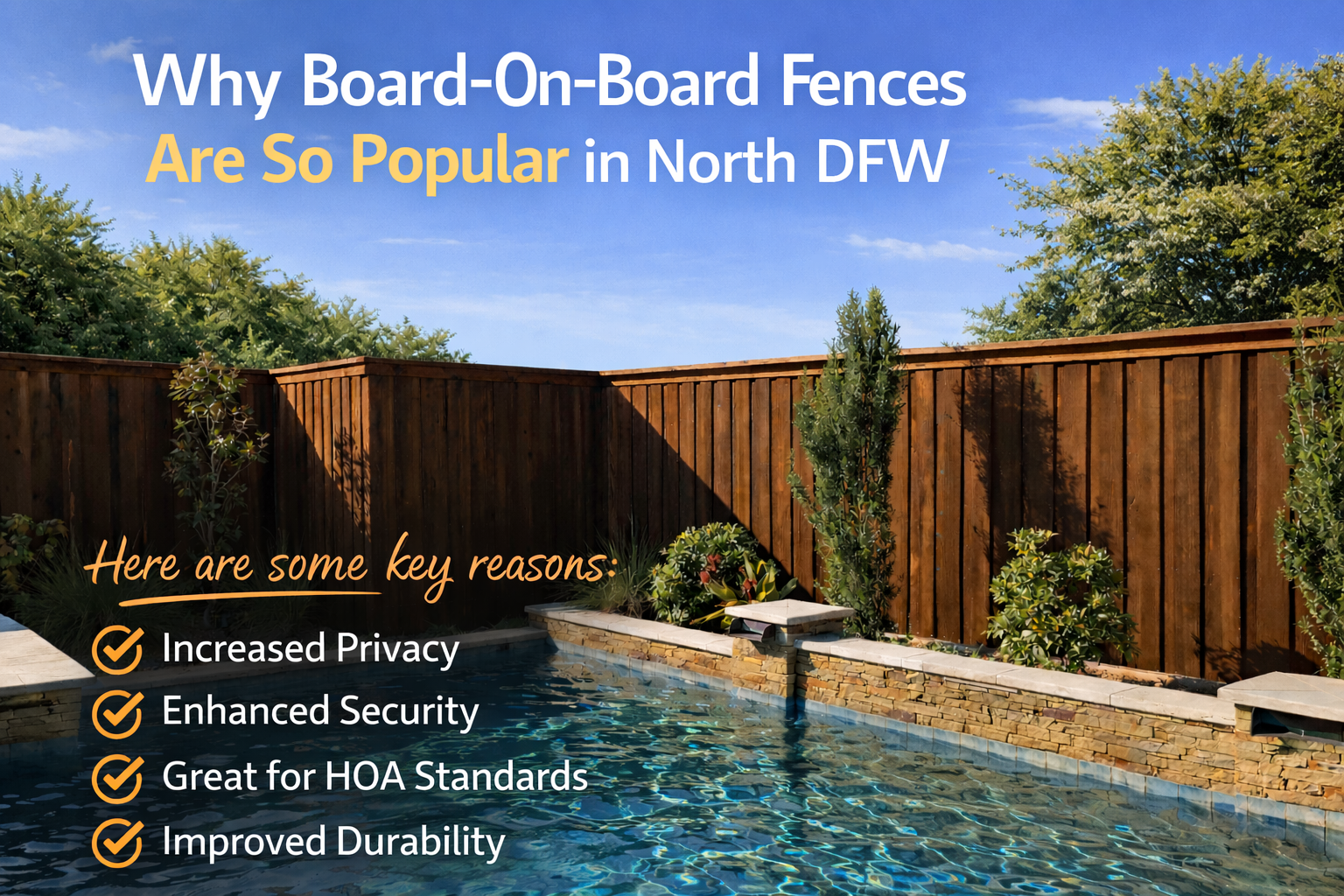
Why Board-On-Board Fences Are So Popular in North DFW
If you drive through neighborhoods across North DFW — including McKinney, Frisco, Prosper, Celina, Plano, and Little Elm — one style of fence stands out more than most: the board-on-board privacy fence.
This style has become one of the most requested fences we build because it provides privacy, durability, and a clean finished appearance. In many communities across North Texas, board-on-board fencing is not just popular — it’s sometimes required by HOAs or city regulations.
Let’s take a closer look at why this fence style is so common throughout North DFW.
Many HOAs And Cities Require Board-On-Board Fences
In several neighborhoods throughout North Texas, HOA guidelines and city codes require board-on-board fencing for privacy fences.
The reason is simple: board-on-board fences create a more uniform and visually appealing look across the neighborhood. Since the pickets overlap, the fence appears consistent from both sides, helping maintain a clean community appearance.
Some HOAs prefer board-on-board because it:
- Eliminates visible gaps between pickets
- Looks more finished from both directions
- Maintains a consistent style throughout the neighborhood
This is especially common in newer developments in Prosper, Celina, and parts of McKinney, where neighborhood design standards are more strict.
Before installing a fence, homeowners should always check HOA guidelines and local city codes to make sure the fence style meets requirements.
True Privacy With No Gaps
One of the biggest reasons homeowners choose board-on-board fencing is true privacy.
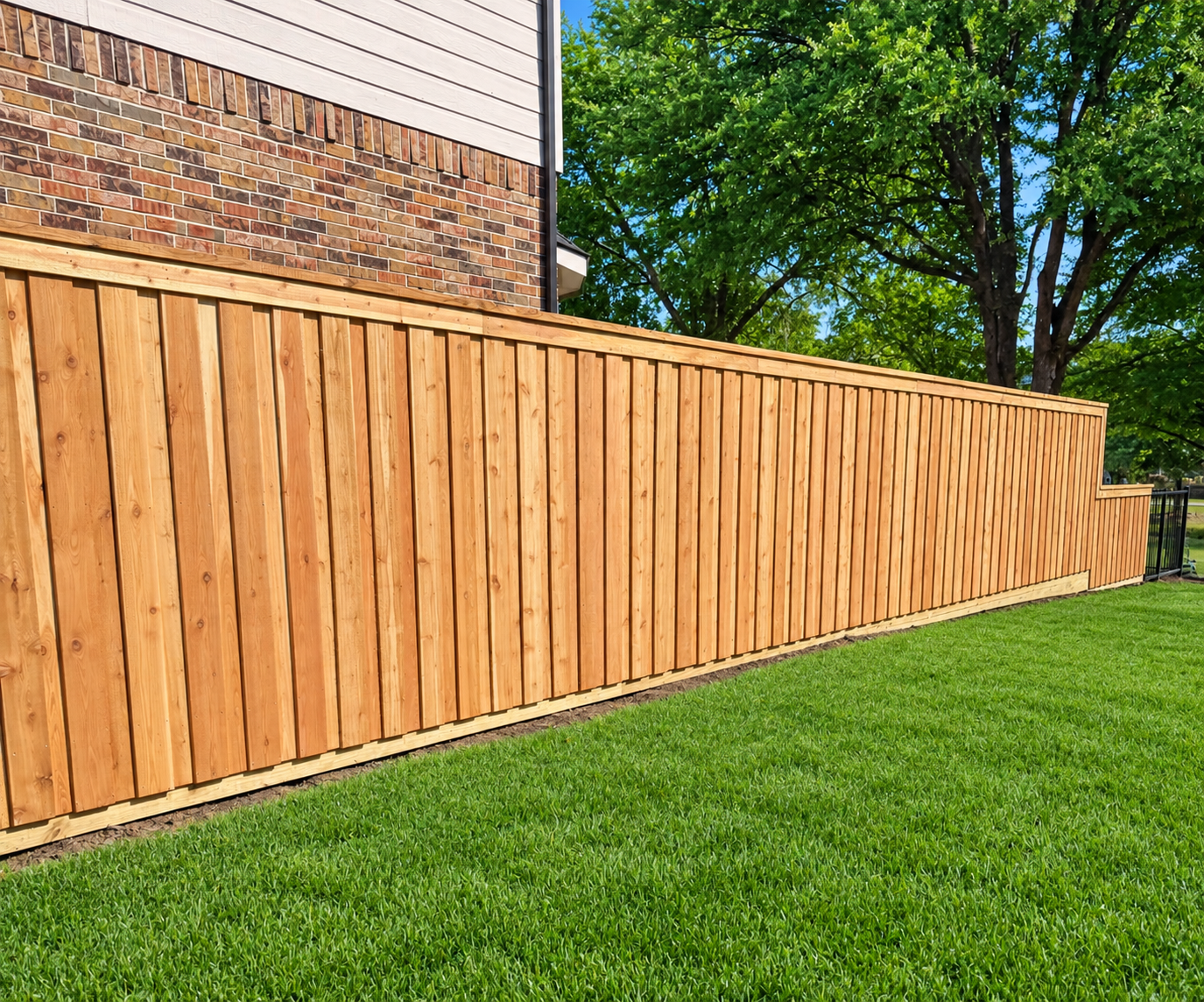
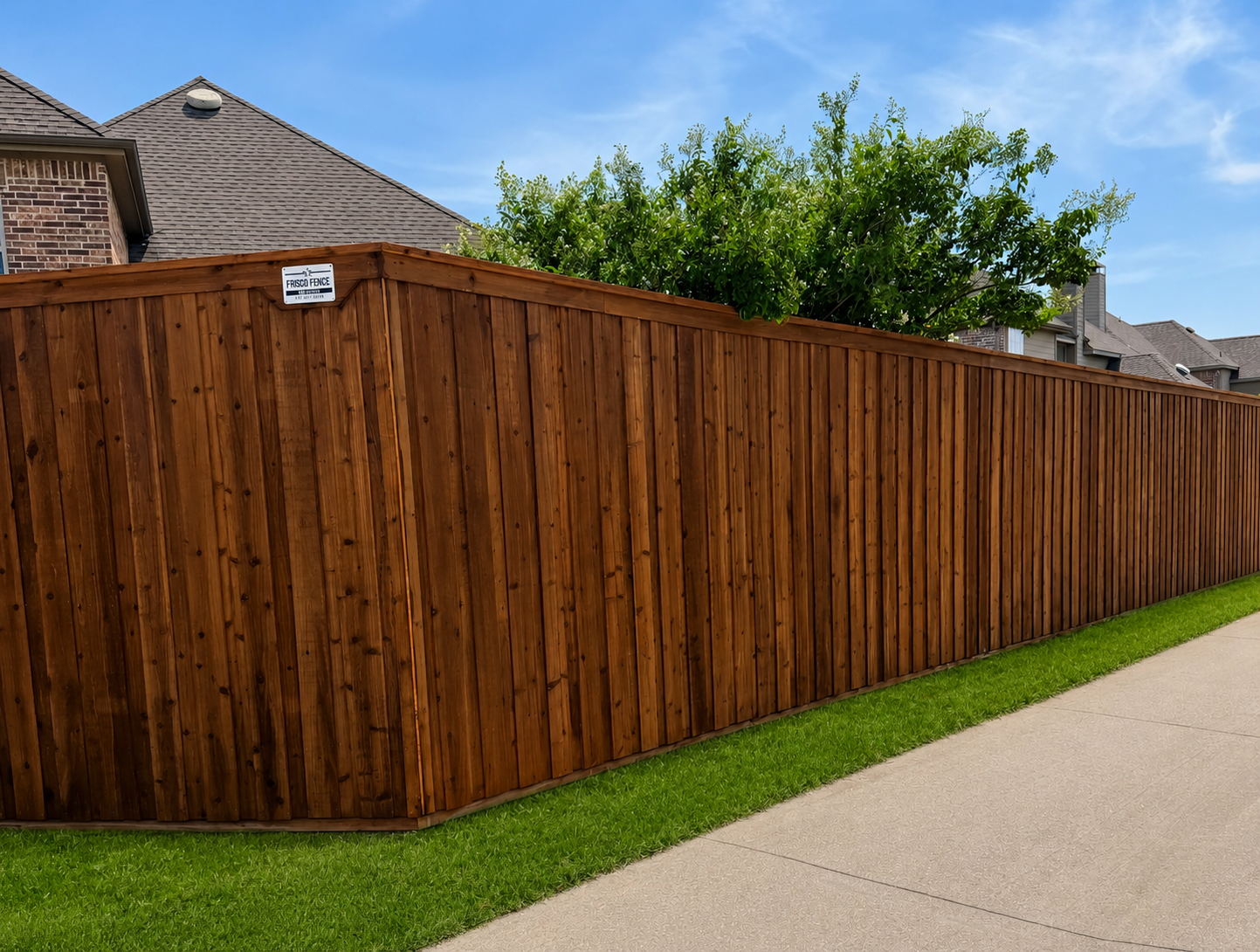
Unlike traditional side-by-side fences where pickets are installed edge to edge, board-on-board fences use overlapping pickets. A second layer of pickets covers the seams between the first layer.
Because of this overlapping design, gaps do not appear as the wood naturally expands and contracts with weather changes.
The result is consistent privacy year-round, not just when the fence is first installed.
Better Performance In North Texas Weather
North Texas weather can be unpredictable. Strong winds, heavy rain, and seasonal storms are common throughout the year.
Board-on-board fencing helps handle these conditions better because the alternating pickets help distribute wind pressure across the fence structure. Instead of wind pushing straight through large gaps, the pressure is spread out more evenly.
When installed correctly with properly set posts and strong rails, board-on-board fences tend to hold up well against the weather conditions we see across North DFW.
A Finished Look On Both Sides Of The Fence
Another reason this style is so popular is that both sides of the fence look finished.
Traditional fences often have a “good side” and a “back side,” where one neighbor sees the rails and posts.
Board-on-board fencing creates a cleaner appearance from both directions, which is one of the reasons many HOAs prefer this style.
In neighborhoods where fences run between multiple homes, this design helps keep the community looking consistent and well maintained.
Ideal For Taller Privacy Fences
Many cities across North DFW allow 6-foot or 8-foot privacy fences, and board-on-board construction works especially well for taller fences.
The overlapping pickets help maintain privacy at these heights and give the fence a solid, structured appearance.
Homeowners often pair board-on-board fences with upgrades like:
- 2x6 top caps
- decorative trim boards
- pressure-treated kickboards
These additions help protect the fence while also enhancing the overall appearance.
Cedar Performs Well In Texas
Most board-on-board fences throughout North Texas are built with Western Red Cedar or Japanese Cedar.
Cedar is naturally resistant to:
- insects
- moisture
- decay
It also performs well in the hot summers and humidity swings common in North Texas.
Many homeowners also choose to apply an oil-based penetrating stain, which helps protect the wood and extend the life of the fence.
Built Right From The Ground Up
While board-on-board fencing offers many advantages, the quality of installation matters just as much as the materials used.
Key structural components include:
- properly set fence posts
- adequate post depth
- strong horizontal rails
- quality cedar materials
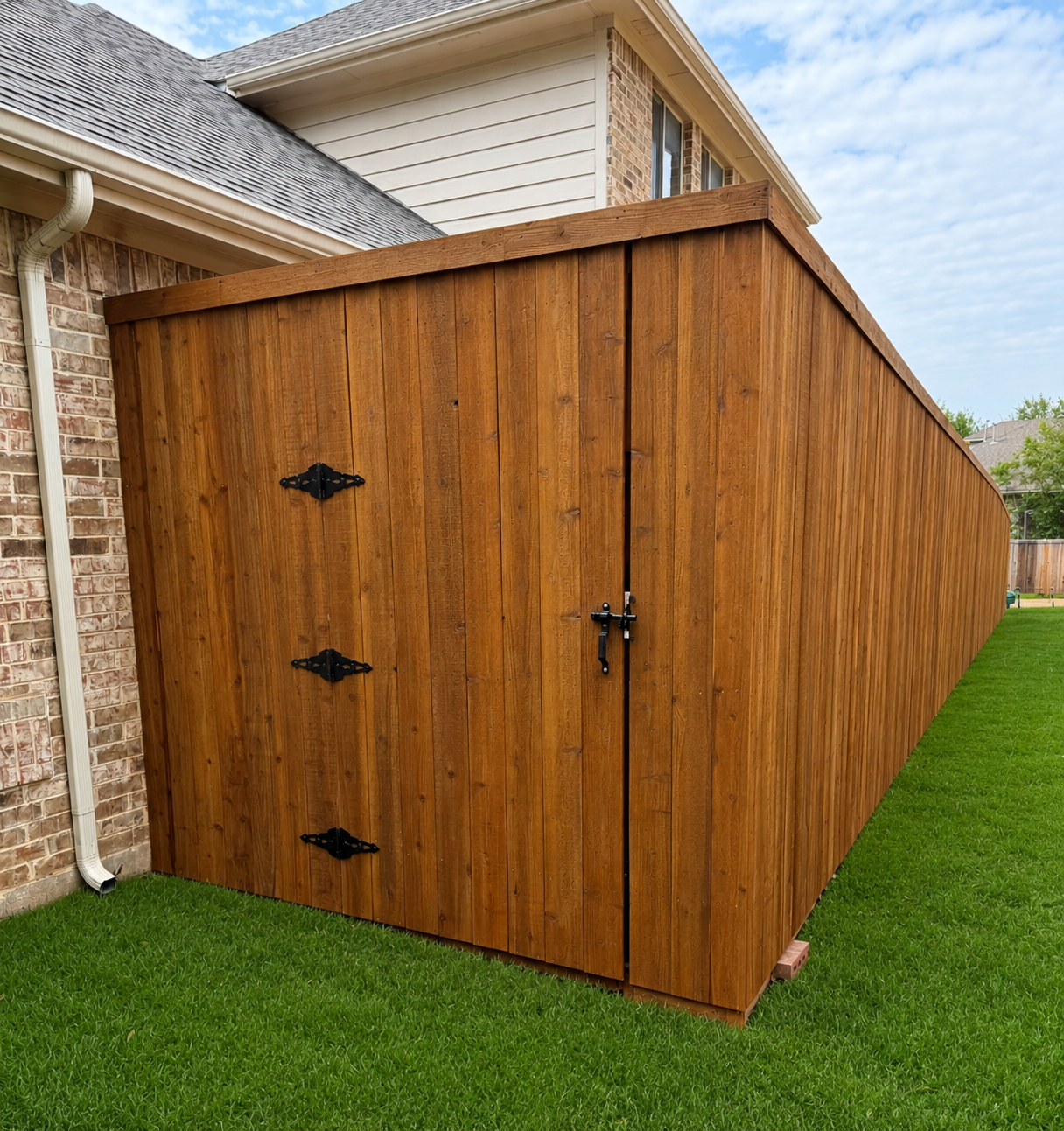
- properly framed gates
When installed correctly, a cedar board-on-board fence can provide years of privacy, security, and curb appeal.
Across neighborhoods throughout North DFW, board-on-board fencing continues to be one of the most common and reliable choices for homeowners.
Between privacy, durability, HOA compliance, and clean design, it’s easy to see why this fence style has become the standard for many communities across the area.