The Foundation Matters: Why Steel Posts and Proper Concrete Depth Win the Wind War
This is a subtitle for your new post

The Foundation Matters: Why Steel Posts and Proper Concrete Depth Win the Wind War
When homeowners shop for a new fence, most of the attention goes to what they can see.
What type of wood should I choose?
Should I go with Board-on-Board or Side-by-Side?
Do I want a top cap, kickboard, or decorative trim?
While those choices certainly matter, the most important part of your fence is the part you'll never see again once it's installed.
It's what's underground.
In North Texas, where high winds, severe thunderstorms, tornadoes, heavy rain, and expansive clay soils are part of life, your fence's foundation determines whether it stands strong for years or ends up leaning after the next major storm.
North Texas Weather Is Tough on Fences
If you've lived in North Texas for any length of time, you've seen what our weather can do.
Straight-line winds exceeding 60 mph.
Powerful thunderstorms.
Heavy rainfall that saturates the ground.
Long periods of drought followed by sudden downpours.
Clay soil that expands when wet and shrinks when dry.
All of these conditions put tremendous stress on every fence post.
When the foundation isn't built correctly, the fence eventually tells the story.
You'll notice leaning sections, sagging gates, loose posts, cracked concrete, or entire fence panels blown over during a storm.
Your Fence Is Only as Strong as Its Posts
Think of your fence like a house.
Beautiful siding doesn't matter if the foundation is failing.
The same principle applies to fencing.
The pickets, rails, and trim all depend on one thing.
Strong posts that stay firmly anchored in the ground.
Unfortunately, many fences fail because contractors focus on lowering costs instead of building a foundation that will last.
Why Wood Posts Fail
For decades, wood fence posts were the standard.
The problem isn't the wood above ground.
The problem is where the post meets the soil.
This area experiences constant moisture, oxygen, insects, bacteria, and changing temperatures. Even pressure-treated lumber eventually begins to deteriorate at the ground line.
As the post weakens, several problems develop:
- Rot at the soil line
- Reduced structural strength
- Leaning fence sections
- Loose or unstable posts
- Gates that sag or won't latch properly
- Increased likelihood of failure during high winds
Many homeowners assume the fence simply "got old."
In reality, the foundation failed long before the rest of the fence did.
Why Round Galvanized Steel Posts Are Superior
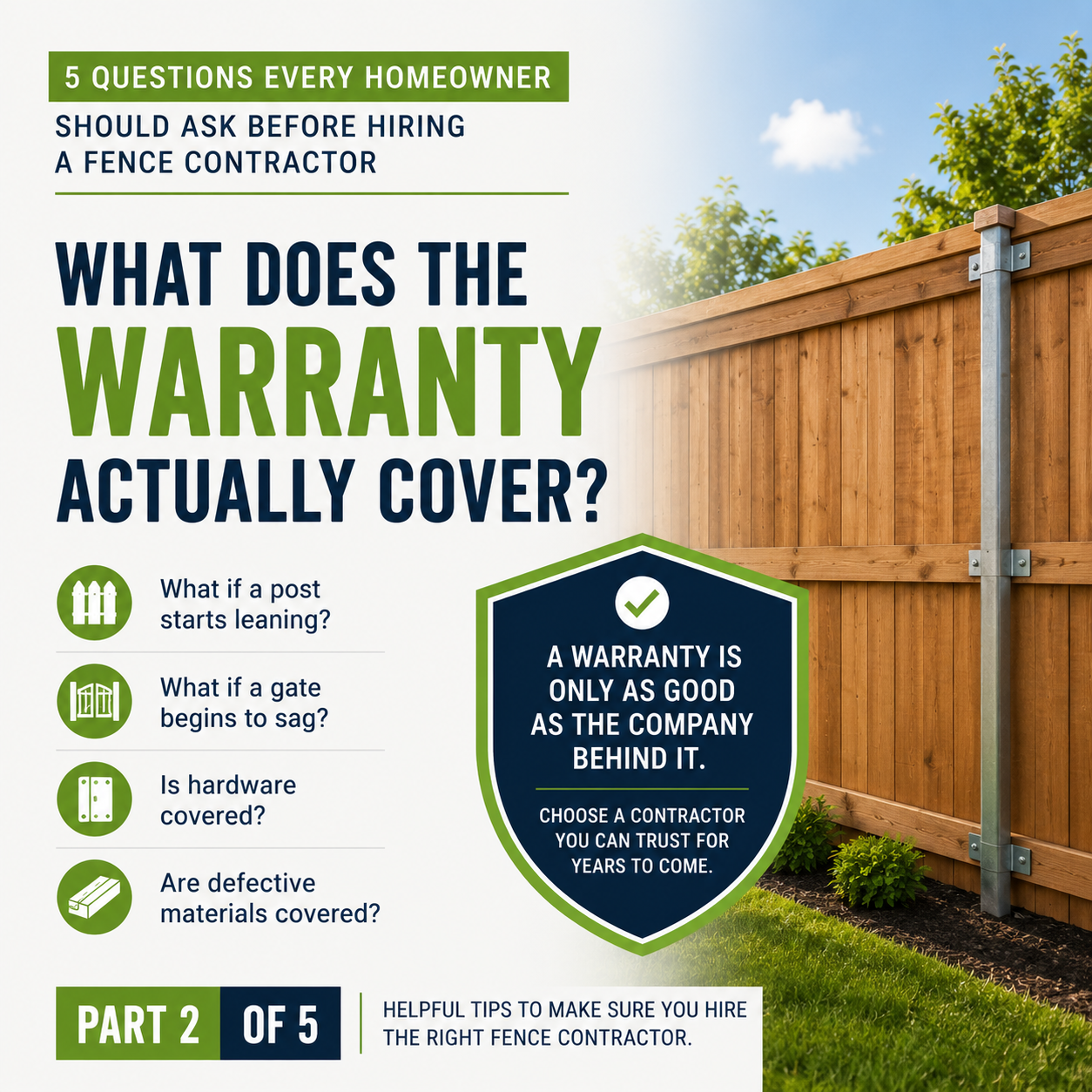
This is one of the biggest reasons we install 2 3/8-inch galvanized round steel posts on the vast majority of our wood fence projects.
Unlike wood, galvanized steel does not rot.
It isn't susceptible to termites.
It won't deteriorate from constant soil contact.
Properly galvanized steel maintains its structural integrity for decades while providing significantly greater resistance to bending and wind loads.
Round steel posts also distribute wind forces more evenly than square or wood posts, reducing stress concentrations during severe weather.
Once installed correctly, they provide an incredibly solid backbone for the entire fence.
The wood fence you see is beautiful.
The steel framework underneath is what keeps it standing.
Concrete Depth Is Just as Important
Even the strongest steel post can fail if it isn't installed properly.
This is where concrete footing depth becomes critical.
Every fence acts like a giant sail during high winds.
The taller the fence, the more wind pressure it catches.
If the concrete footing isn't deep enough, that pressure creates leverage that slowly loosens the post over time.
Eventually you'll notice:
- Leaning fence lines
- Fence movement during storms
- Posts pulling away from the concrete
- Gates becoming misaligned
- Sections beginning to shift
A properly installed concrete footing creates the stability needed to resist those forces.
North Texas Clay Soil Never Stops Moving
One challenge unique to our area is expansive clay soil.
When it rains, the clay absorbs moisture and expands.
During hot summer months, it dries out and contracts.
This constant cycle places tremendous pressure on fence foundations year after year.
Posts installed too shallow are far more likely to move as the soil shifts.
Proper footing depth helps anchor the fence below much of that surface movement, providing greater long-term stability.
Heavy Rain Can Be Just as Damaging as High Winds
Many homeowners think wind is the biggest enemy of a fence.
In reality, heavy rain often starts the problem.
Saturated soil becomes softer and provides less support around the post.
When high winds arrive shortly afterward, weakened soil allows posts to move much more easily.
That's why proper concrete installation isn't just about holding the post upright.
It's about creating a foundation that remains stable through changing soil conditions.
Saving Money on Posts Often Costs More Later
One of the easiest ways for an inexperienced contractor to lower their price is by cutting corners underground.
They may use:
- Smaller posts
- Wood posts instead of galvanized steel
- Less concrete
- Shallow post holes
- Inconsistent installation methods
The fence may look identical on the day it's finished.
The difference usually becomes obvious after a few years of North Texas weather.
A slightly lower price today can become an expensive repair or premature replacement later.
Our Approach at Frisco Fence & Stain
At Frisco Fence & Stain, we believe homeowners deserve to know what's supporting their investment.
That's why we build from the ground up using quality materials and proven installation methods designed for North Texas conditions.
For most residential wood fences, we install heavy-duty 2 3/8-inch galvanized round steel posts set in properly sized concrete footings. Our goal is to create a foundation that helps your fence withstand high winds, heavy rain, and the constant movement of North Texas clay soils.
Because while beautiful cedar is what everyone notices...
A properly built foundation is what keeps it standing.
The Bottom Line
A fence isn't just a row of pickets.
It's an engineered structure that must withstand years of wind, rain, shifting soil, and changing weather conditions.
The strongest pickets and the most beautiful stain won't matter if the posts below ground fail.
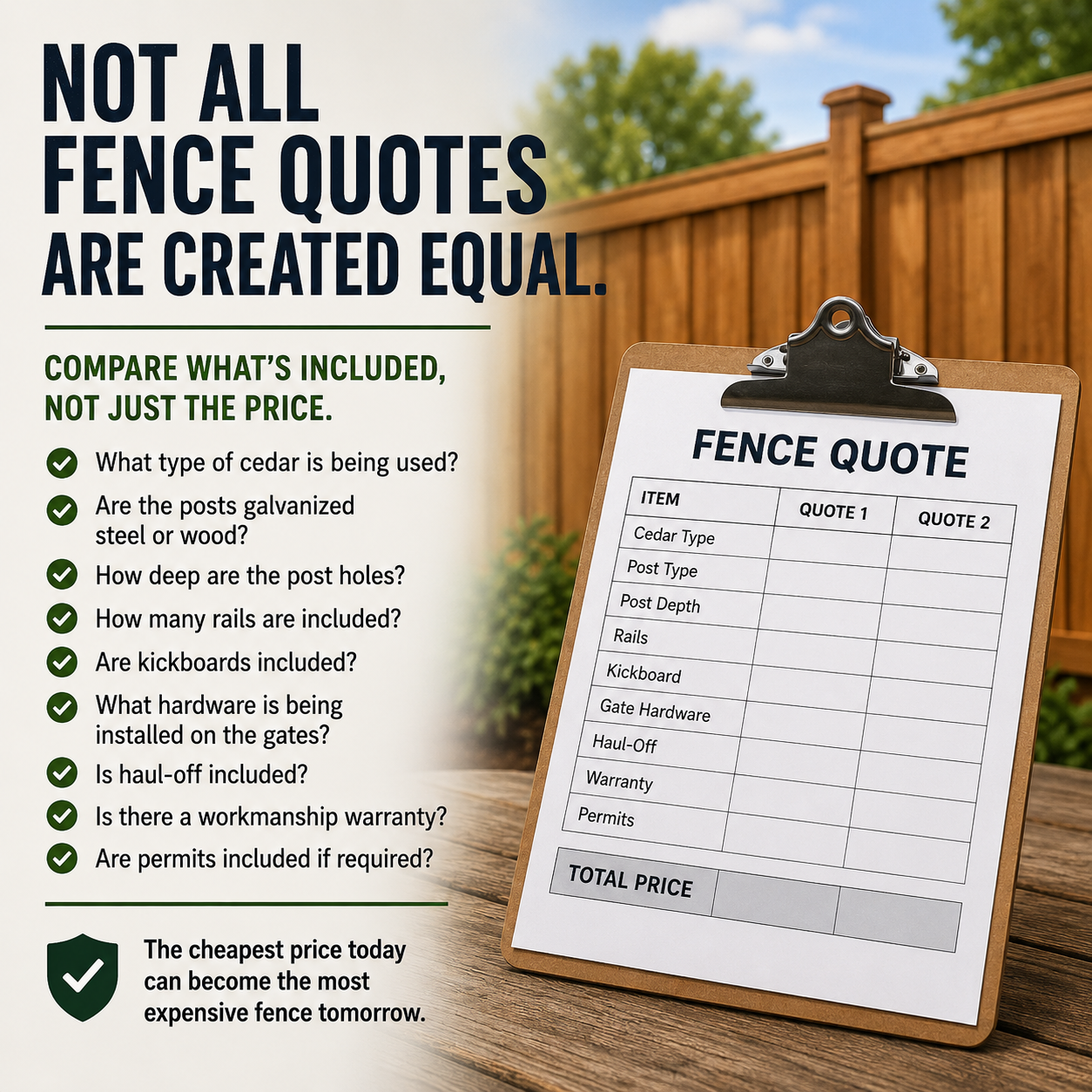
When comparing fence estimates, don't just ask what type of cedar you're getting.
Ask what's holding it up.
Because when the next North Texas storm rolls through, the foundation will determine whether your fence is still standing when the skies clear.
At Frisco Fence & Stain, we believe the best fences are built from the ground up. It's an investment in strength, longevity, and peace of mind that pays off every time severe weather arrives.