Frisco Fence Codes & Requirements: What Homeowners Need to Know Before Building a Fence
Frisco Fence Codes & Requirements: What Homeowners Need to Know Before Building a Fence
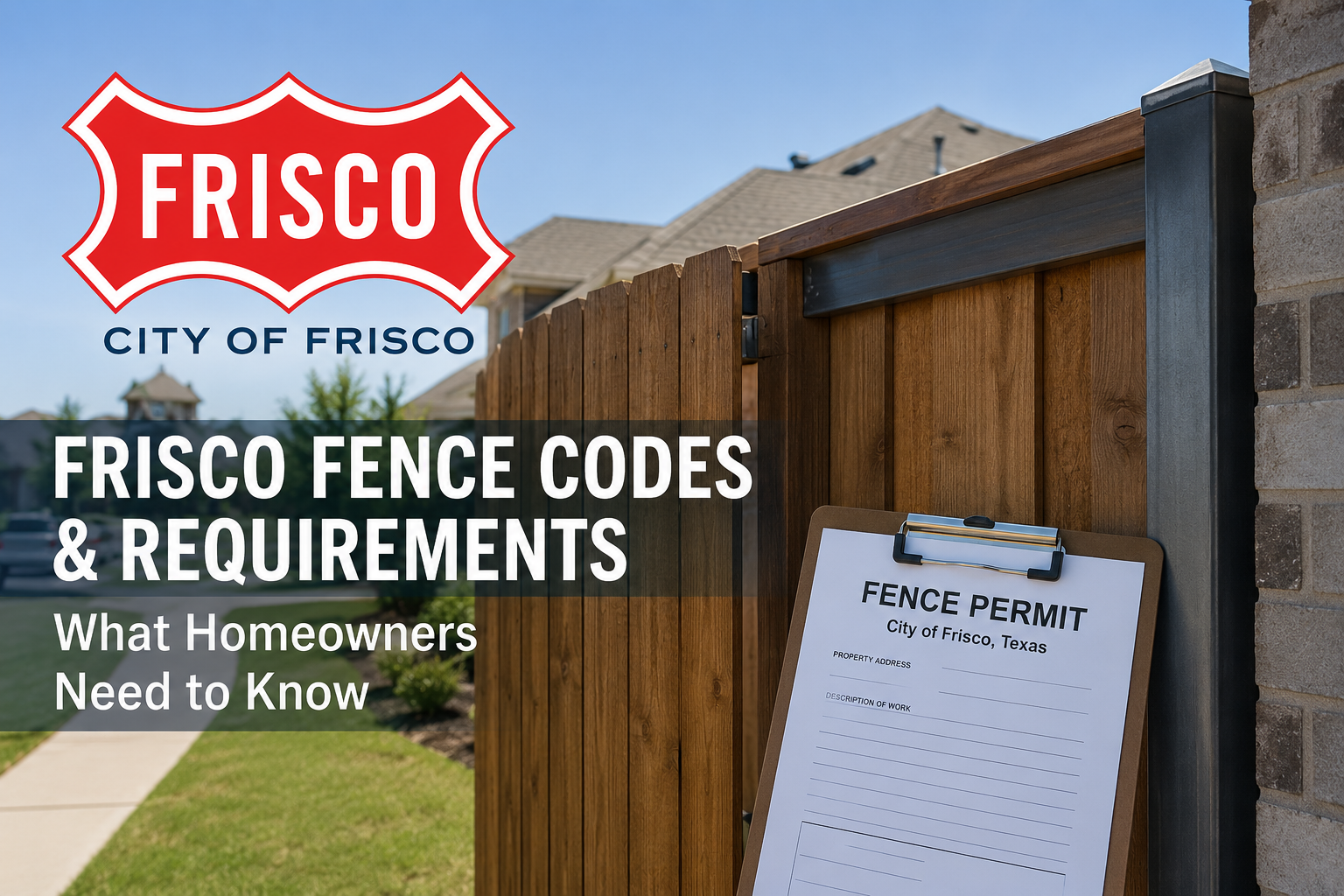
Frisco Fence Codes & Requirements: What Homeowners Need to Know Before Building a Fence
If you're planning to replace an old fence or install a new one in Frisco, it's important to understand the city's fence regulations before construction begins.
Many homeowners are surprised to learn that Frisco has specific requirements regarding fence height, steel posts, permits, property lines, and approved materials. Failing to follow these regulations can result in costly corrections, permit issues, or HOA violations.
Here's a simple breakdown of the most important fence requirements every Frisco homeowner should know.
Do You Need a Fence Permit in Frisco?
In most cases, yes.
A permit is generally required for new fence installations and complete fence replacements. Minor repairs typically do not require a permit, provided the repair is limited to two fence sections or less than sixteen feet in total length.
If you're replacing a substantial portion of your fence, it's always best to verify permit requirements before work begins.
Keep in mind that HOA approval and city permits are separate requirements. Even if the city approves your project, your HOA may have additional restrictions regarding fence style, wood type, stain color, and overall appearance.
Maximum Fence Heights in Frisco
Fence height limits depend on the location of the fence on your property.
Rear and Side Yards
- Maximum height: 8 feet
Front Yards
- Maximum height: 4 feet
These height restrictions help maintain visibility and consistency throughout Frisco neighborhoods.
Property Lines, Easements, and Visibility Requirements
Before installing a fence, it's important to verify property lines and identify any utility easements.
Frisco requires fences to remain entirely within the owner's property boundaries. Fences may not extend into public rights-of-way, utility easements, or city-owned property without specific approval.
Additionally, visibility triangles near streets, alleys, driveways, and intersections must remain clear to protect pedestrian and vehicle safety.
This is one reason why obtaining an accurate survey before construction is strongly recommended.
Why Frisco Requires Steel Fence Posts
One of the biggest changes many homeowners notice is Frisco's requirement for galvanized steel fence posts on most residential privacy fences.
For fences taller than four feet, steel posts generally must meet minimum size and strength requirements established by the city.
The reason is simple: steel posts last longer.
Unlike wood posts, steel posts do not rot underground, resist soil movement better, and provide significantly greater structural support during North Texas windstorms and extreme weather conditions.
At Frisco Fence, we install heavy-duty galvanized steel posts because they provide a stronger, longer-lasting foundation for your fence.
Fence Post Depth and Spacing Requirements
The city also regulates how fence posts must be installed.
Typical requirements include:
Fences Under 7 Feet Tall
- Maximum spacing: 8 feet on center
- Minimum depth: 24 inches in concrete
Fences 7 Feet Tall and Taller
- Maximum spacing: 6 feet on center
- Minimum depth: 36 inches in concrete
These standards help prevent leaning fences, shifting posts, and premature structural failure.
Protecting Wood From Ground Contact
Frisco requires fencing to be constructed in a way that prevents wood from sitting directly on the soil.
Direct ground contact significantly increases the risk of:
- Rot
- Moisture damage
- Insect activity
- Premature deterioration
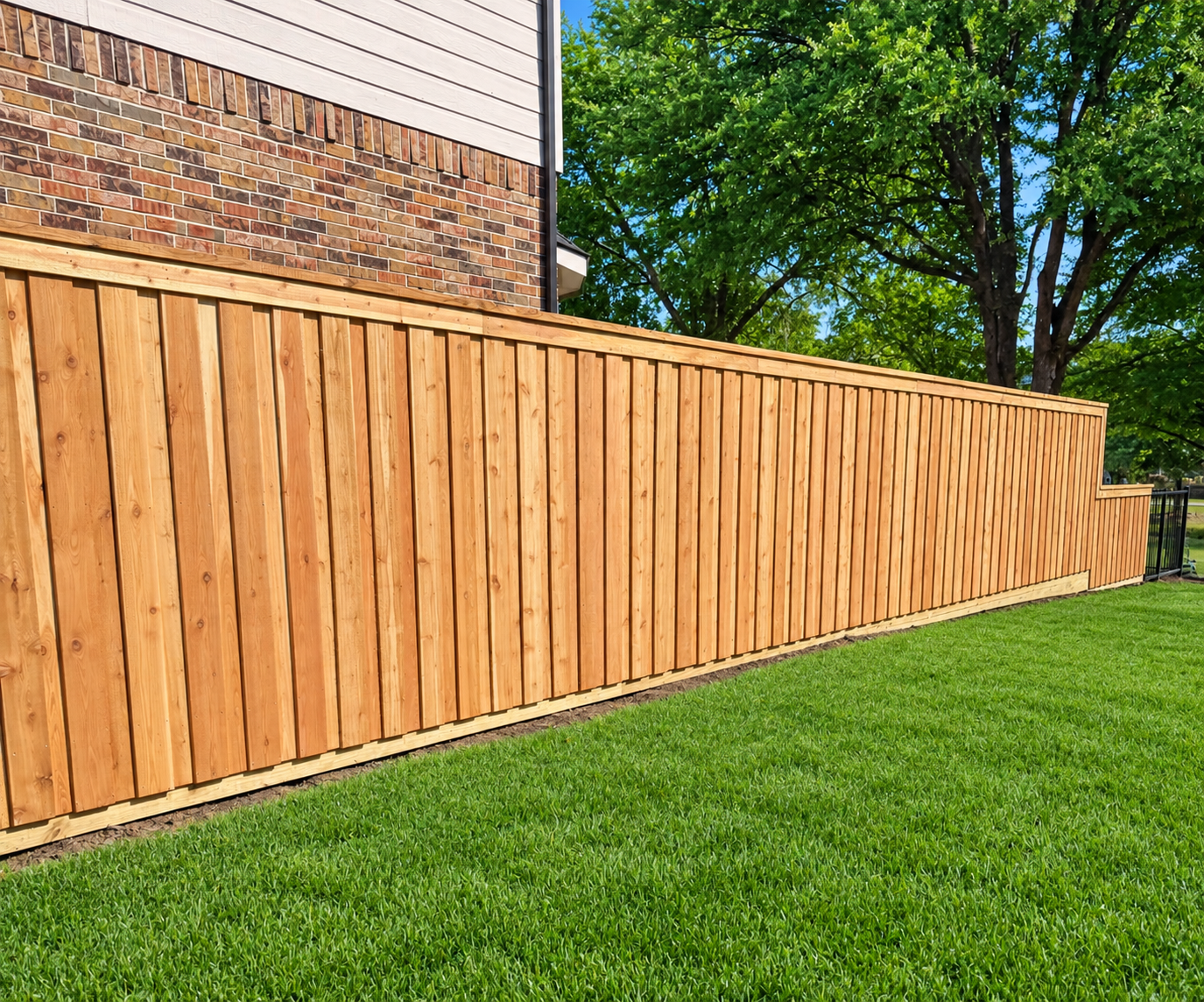
Many homeowners address this requirement by installing treated kickboards along the bottom of the fence, helping protect the cedar pickets while extending the life of the fence.
Wood Must Be Protected
New fence materials must be properly protected from the elements.
Whether through staining, sealing, painting, or pressure treatment, wood fencing should be protected shortly after installation to reduce moisture intrusion, UV damage, and premature aging.
For North Texas fences, oil-based penetrating stains such as Wood Defender provide some of the best long-term protection against our harsh climate.
Materials That Are Not Allowed
Frisco prohibits certain fence materials to maintain neighborhood appearance and safety.
Examples of prohibited materials include:
- Plywood
- Rope or string fencing
- Broken glass
- Bamboo screening
- Unapproved corrugated metal panels
- Residential privacy slats inserted into chain-link fences
- Damaged or unsafe recycled materials
Always verify material requirements before starting your project.
The Finished Side Must Face Out
One of the most common code requirements homeowners ask about is the "good neighbor" rule.
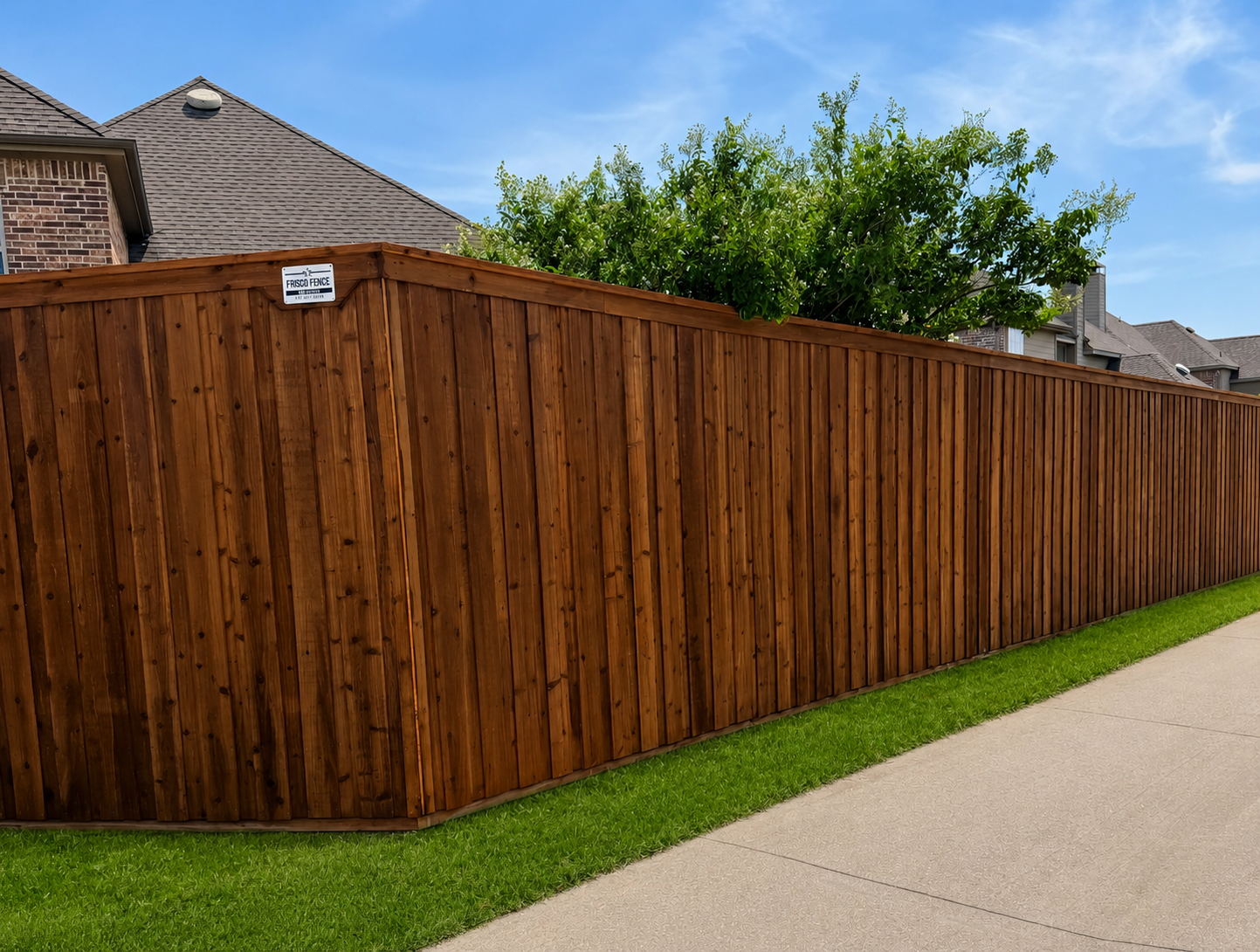
When a fence borders a street, alley, public area, or common space, the finished side of the fence must face outward.
This means fence rails, framing, and structural supports remain on the inside of the yard while the clean finished appearance faces the public view.
Work With a Contractor Who Knows Frisco Codes
Fence regulations can seem overwhelming, but they exist to ensure fences remain safe, attractive, and durable throughout the city.
At Frisco Fence, we handle:
- Permit assistance
- 811 utility locates
- HOA compliance guidance
- Code-compliant fence design
- Steel post installation
- Professional fence replacement and repairs
Our team stays current on local requirements so homeowners don't have to worry about navigating city regulations on their own.
If you're considering a fence replacement, repair, or new installation, contact Frisco Fence and Stain today for a free consultation.
Frisco Fence & Stain
214-501-5450
Construct Your Vision