Board-on-Board vs. Side-by-Side Fencing: Which is Right for Your DFW Backyard?
Board-on-Board vs. Side-by-Side Fencing: Which is Right for Your DFW Backyard?
Board-on-Board vs. Side-by-Side Fencing: Which is Right for Your DFW Backyard?
When it’s time to replace your old, weathered backyard fence, you have a couple of major structural decisions to make. Beyond choosing the right wood, you need to decide how those pickets are going to face the world.
In North Texas, two primary styles dominate residential yards: board-on-boardand side-by-side.
While both look great on day one, they perform very differently over time. Here is what you need to know to choose the perfect style for your home.
Side-by-Side Fencing: The Traditional Standard
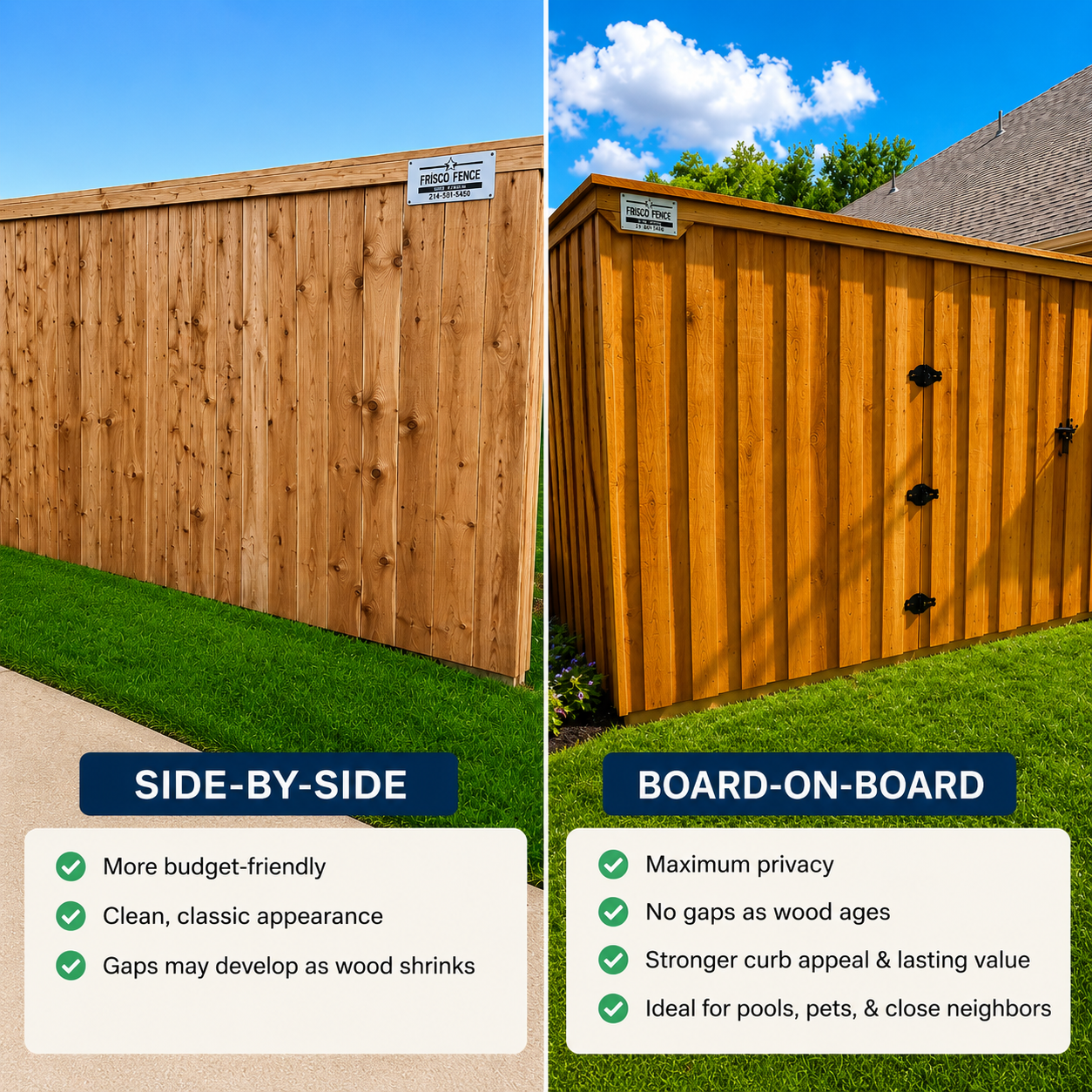
Side-by-side fencing is exactly what it sounds like: fence pickets are placed right next to each other, flush against the horizontal rails.
- The Pros: It offers a clean, classic look and uses fewer materials, making it a highly cost-effective option for homeowners looking to secure their property line on a budget.
- The Reality:Wood is a natural product. When raw wood is exposed to the elements, it naturally loses moisture and shrinks. With a side-by-side fence, that shrinkage creates thin gaps between every single picket over time. If true, uninterrupted privacy is your goal, side-by-side might leave you feeling a bit exposed down the road.
Board-on-Board Fencing: The Ultimate Privacy Solution
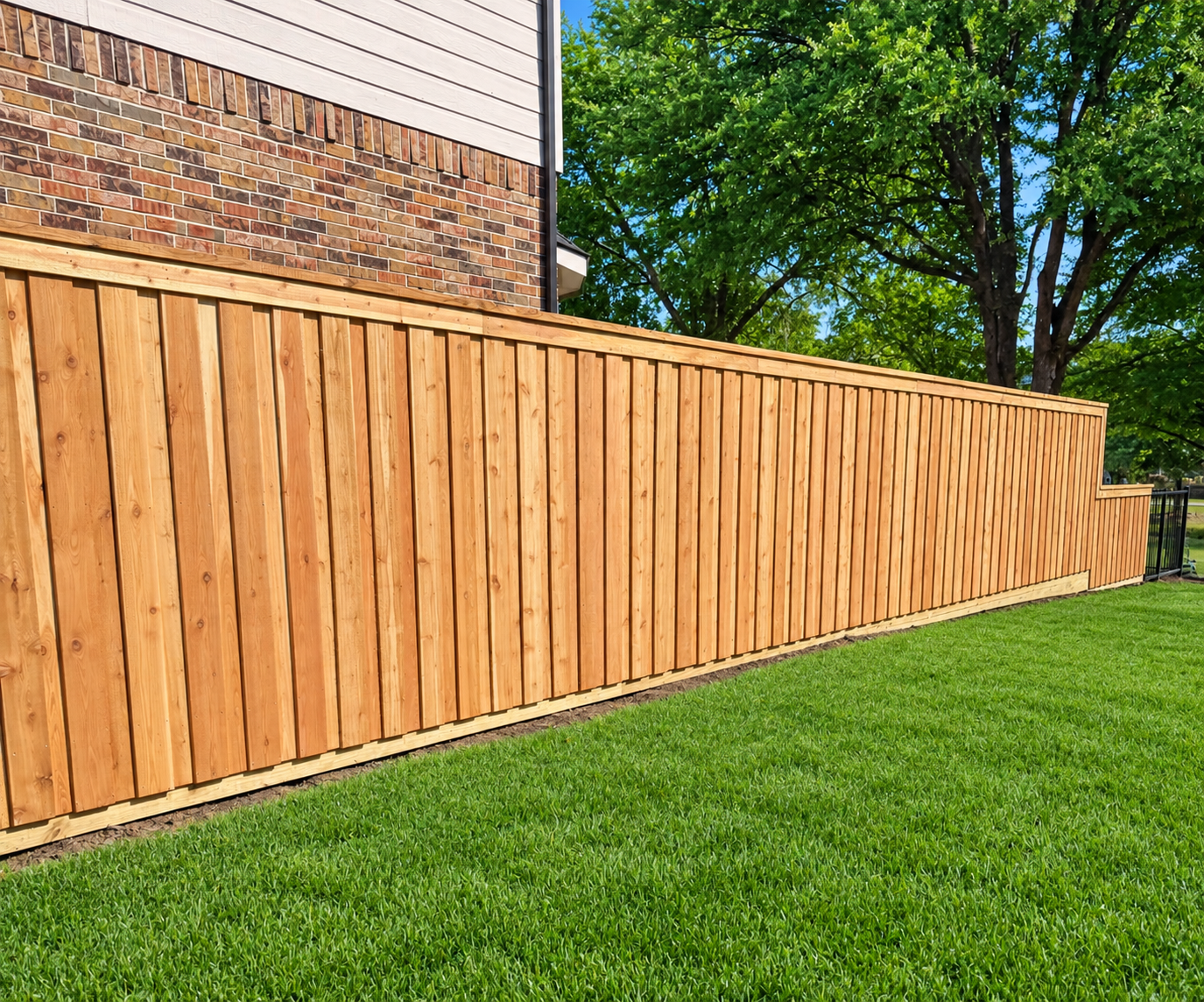
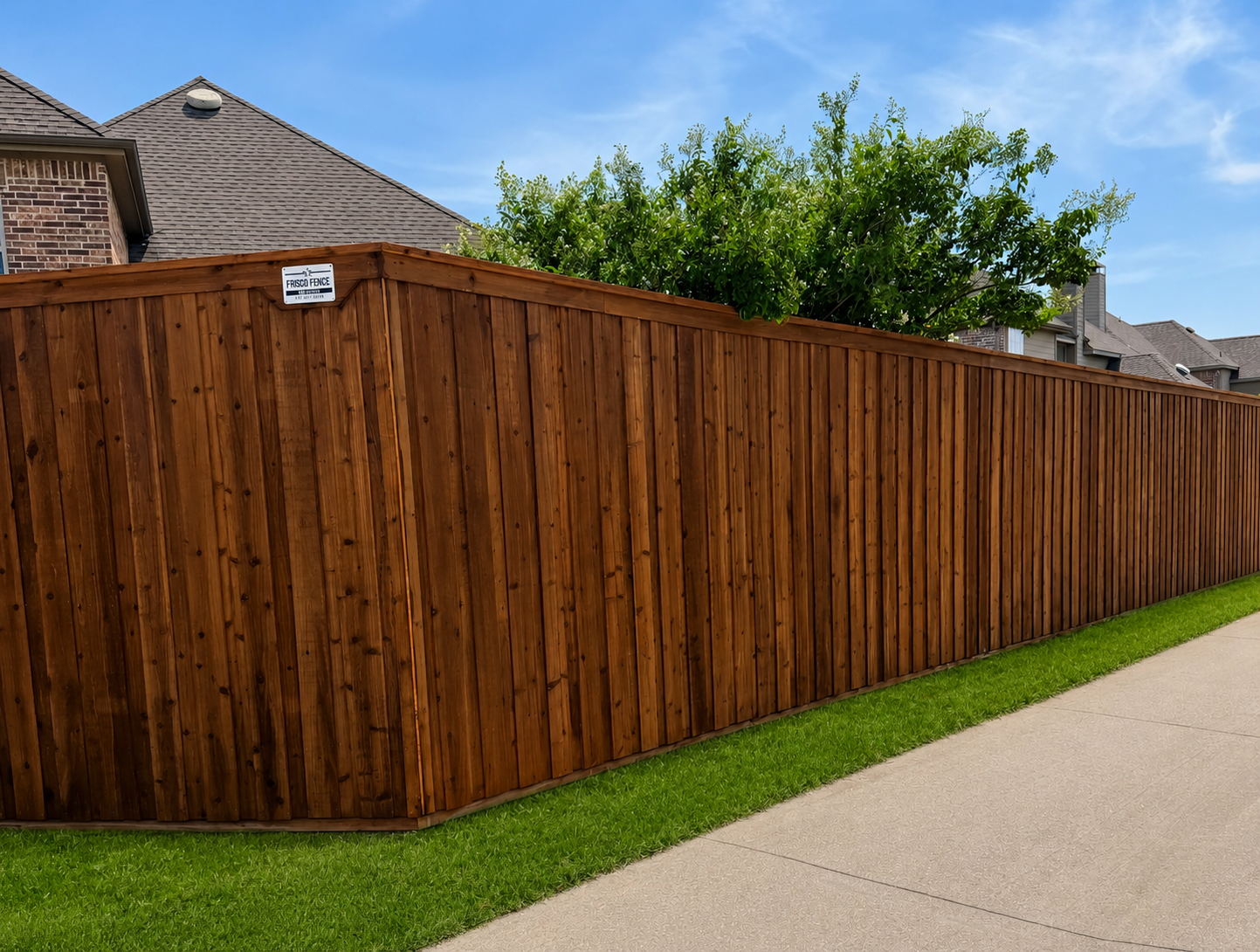
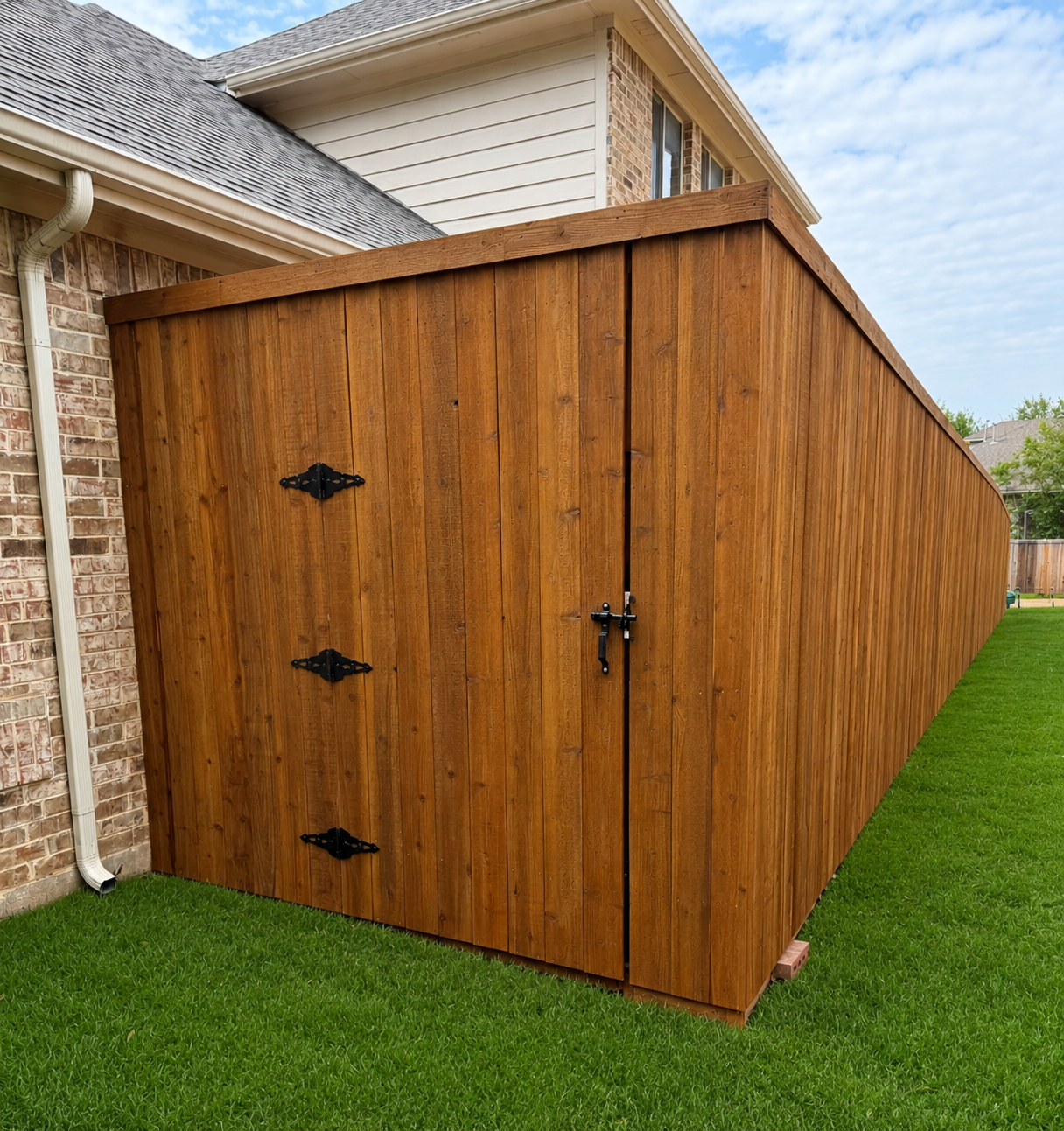
Board-on-board construction uses an overlapping design. Pickets are fastened to the rails with a deliberate overlap, meaning the edge of one picket sits squarely over the next.
- The Pros:This design offers 100% total privacy. Because the boards overlap, when the wood inevitably dries out and shrinks, the overlap absorbs the movement. You will never have gaps, sightlines, or peeking eyes into your backyard. Furthermore, the overlapping pattern adds beautiful depth, heavy shadow lines, and massive curb appeal to your property.
- The Reality:Because it requires more pickets per linear foot, it is a larger upfront investment than side-by-side.
Which One Should You Choose?
If you have a wide-open property line or simply need a budget-friendly boundary marker, side-by-side is a reliable choice. However, if you have close neighbors, a swimming pool, pets, or want maximum curb appeal that maintains its structural privacy for a decade or more, board-on-board is the gold standard for North Texas backyards.
Ready to transform your backyard? Contact Frisco Fence today to schedule a precise on-site consultation and find the perfect layout for your property lines.