Wood Posts vs. Steel Posts: Why More North Texas Cities Require Steel Fence Posts
Wood Posts vs. Steel Posts: Why More North Texas Cities Require Steel Fence Posts
Wood Posts vs. Steel Posts: Why More North Texas Cities Require Steel Fence Posts
When homeowners think about a new fence, they usually focus on the wood. They compare cedar options, fence styles, stain colors, gates, and decorative upgrades.
But the most important part of any fence is the part you rarely see once the project is complete: the posts.
Fence posts are the foundation of the entire structure. They determine how well your fence stands up to Texas weather, shifting soil, wind, and time.
That is why more North Texas cities are now requiring steel fence posts for new fence installations and major fence replacements.
The Problem with Wood Fence Posts
For decades, wood posts were the standard for residential fencing.
The problem is simple.
Wood posts are buried in the ground.
In North Texas, our soil expands and contracts constantly because of drought, heavy rain, heat, and changing moisture levels. Over time, wood posts can break down below ground level, even when the fence above ground still looks fine.
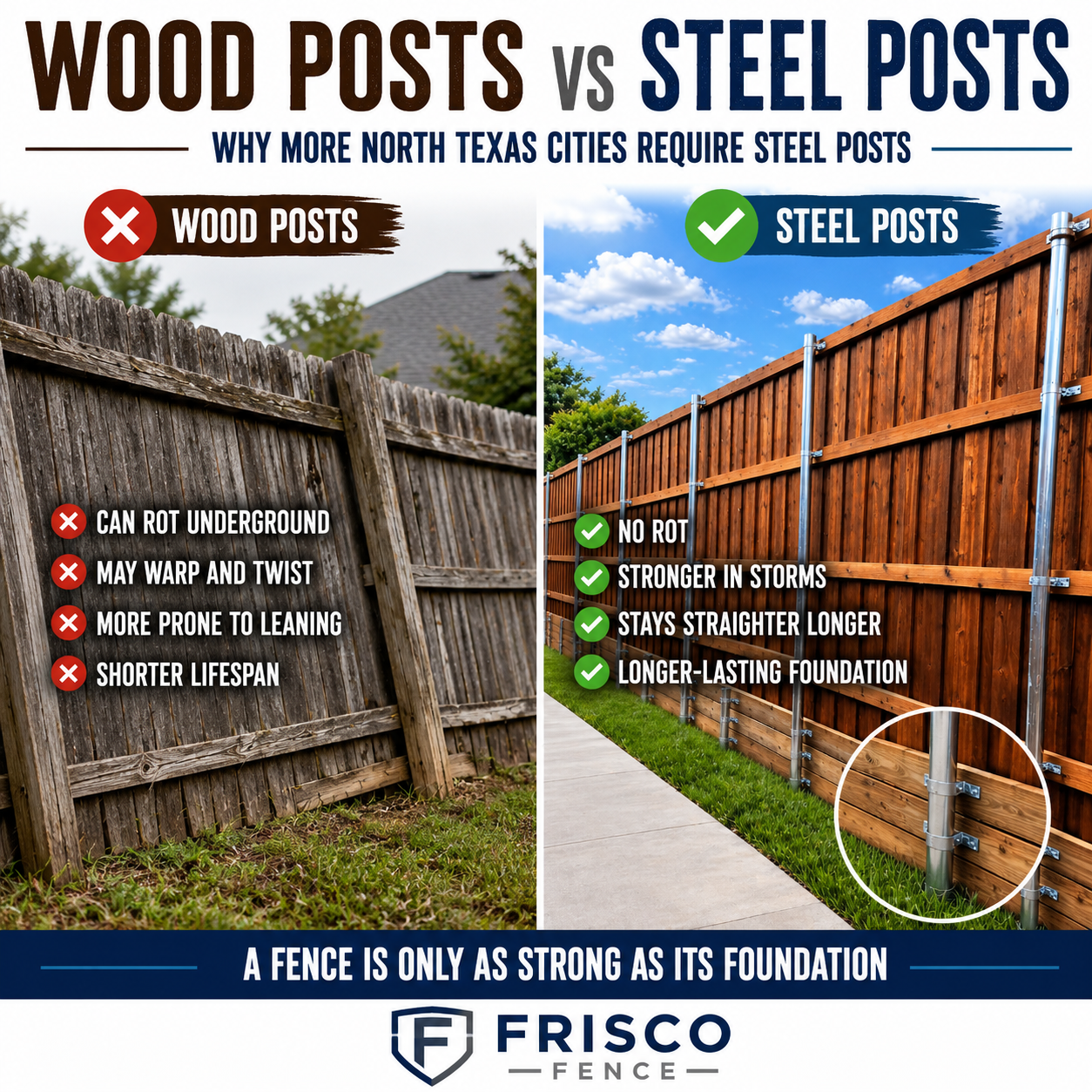
Wood posts can:
- Rot below ground
- Warp and twist
- Crack and split
- Lean as soil shifts
- Weaken during storms
- Require costly repairs or replacement
In many cases, the cedar pickets still have years of life left, but failing wood posts cause the entire fence to lean, sag, or collapse.
Why Steel Posts Are Becoming the Standard
Steel posts solve many of the problems that come with wood posts.
Galvanized steel does not rot, crack, or warp like wood. When properly set in concrete, steel posts create a much stronger foundation for your fence.
Benefits of steel fence posts include:
- Better wind and storm resistance
- No ground-contact rot
- Less maintenance over time
- Stronger structural support
- Longer fence lifespan
- Better performance in North Texas clay soil
In many cases, steel posts will outlast the wood fence attached to them.
Why Cities Are Requiring Steel Posts
Many North Texas cities have seen the long-term problems caused by failing wood posts.
Leaning fences, broken posts, storm damage, and unsafe structures can create issues for homeowners, neighborhoods, and city code enforcement.
That is why more cities are requiring steel posts for new fence installations or major replacements.
Steel posts help:
- Create safer fence structures
- Reduce future code issues
- Prevent leaning and falling fences
- Improve neighborhood appearance
- Provide longer-lasting construction
Requirements vary by city, but steel posts have become common throughout Frisco, McKinney, Plano, Prosper, Celina, Little Elm, and surrounding North Texas communities.
In some areas, steel posts are no longer just an upgrade. They may be required by local code.
You Can Still Have a Beautiful Wood Fence
One concern homeowners often have is appearance.
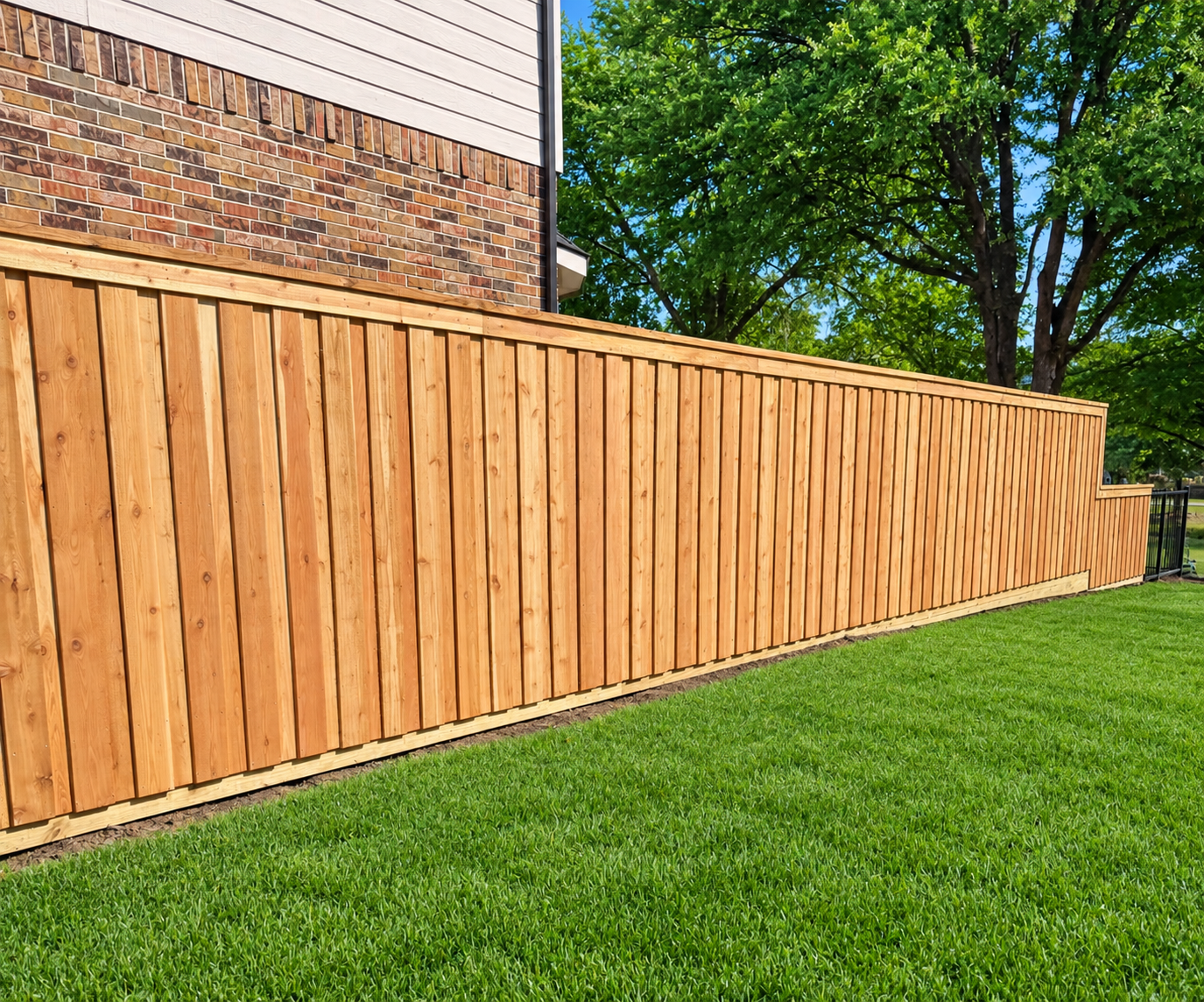
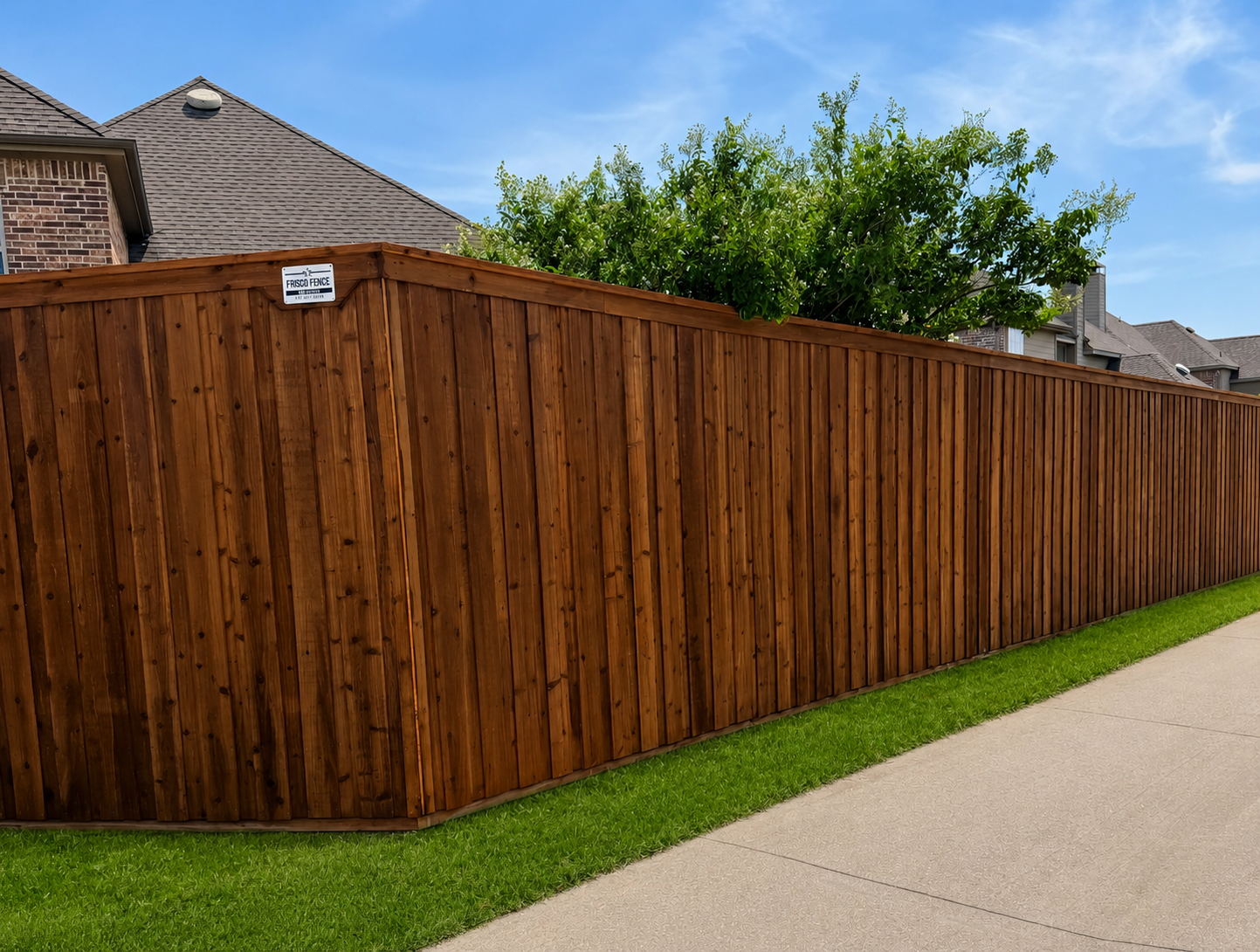
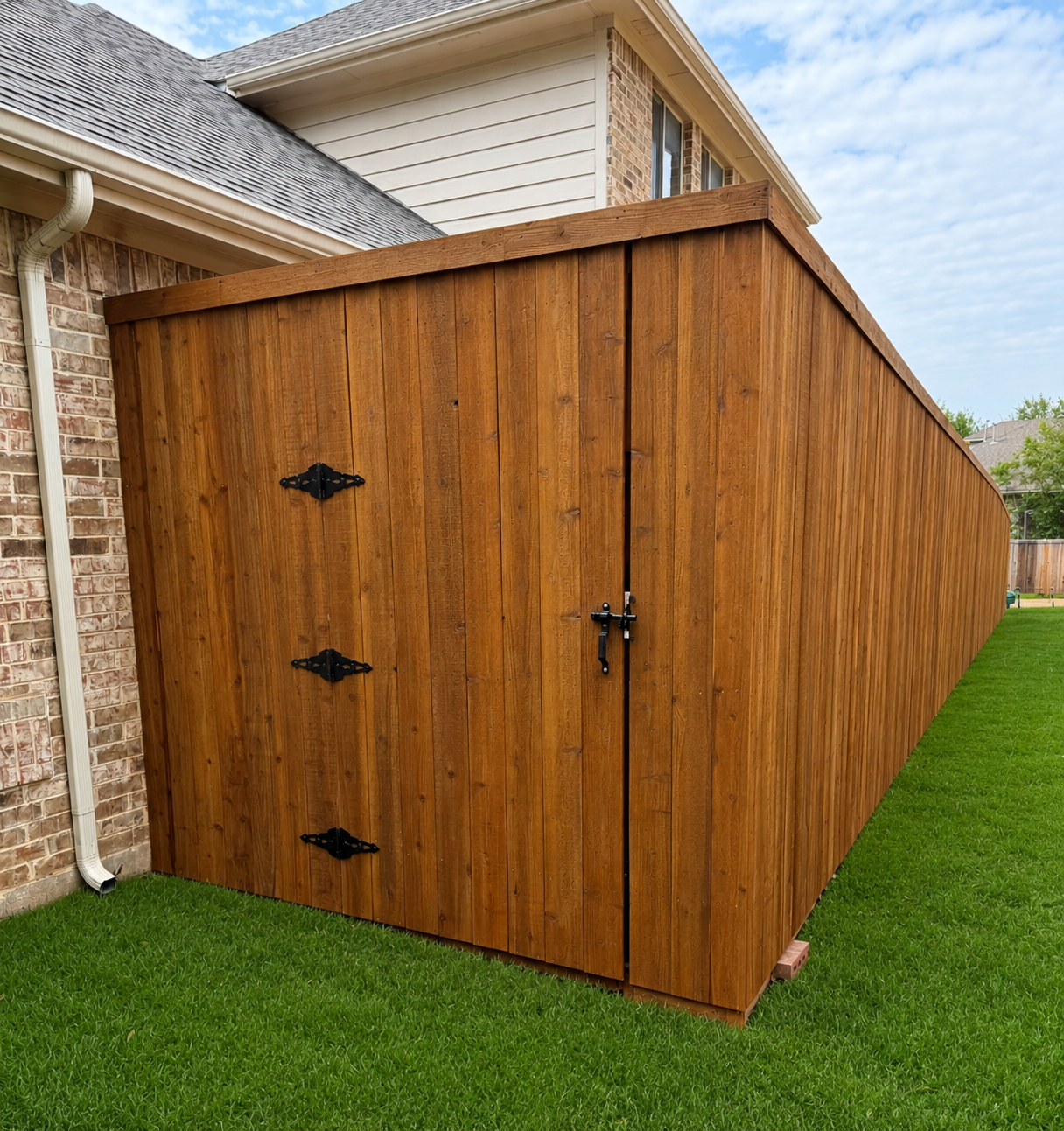
The good news is that steel posts can be hidden behind the fence pickets or boxed in with cedar trim.
This gives you the natural beauty of a wood privacy fence with the strength and durability of steel posts.
From the street, most people will never know the fence is supported by steel.
Our Recommendation
At Frisco Fence, we strongly recommend galvanized steel posts for almost every wood fence we build.
Cedar pickets, top caps, trim, stain, and gates make a fence beautiful. But steel posts help keep that fence straight, strong, and standing for years to come.
A fence is only as strong as its foundation.
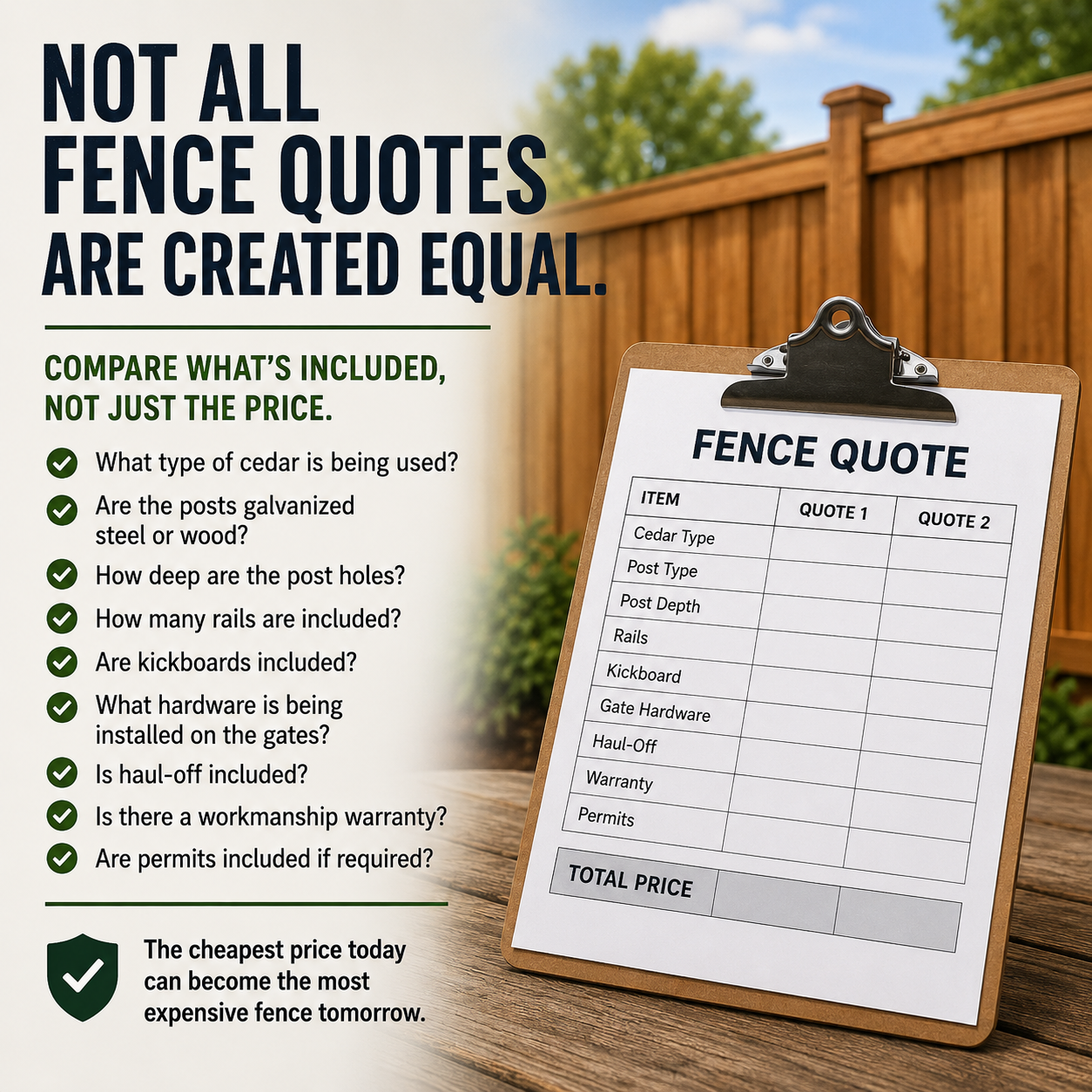
If you are considering a new fence or replacement fence in North Texas, make sure you compare what is underground, not just what you can see above ground.